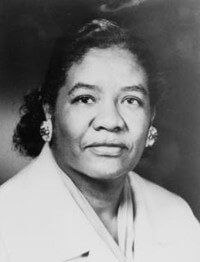
DR. DOROTHY BROWN
- Program
- Subject
- Location
- Lat/Long
- Grant Recipient
-
NYS Historic
-
People, Science
- 250 Spring Ave, Troy, NY 12180, USA
- 42.709987159733, -73.666554236833
-
Vanderheyden
DR. DOROTHY BROWN
Inscription
DR. DOROTHY BROWN1914-2004. GREW UP AT TROY
ORPHAN ASYLUM. MEHARRY MEDICAL
COLLEGE 1948. AMERICAN COLLEGE
OF SURGEONS FELLOW IN 1959.
ELECTED TN LEGISLATURE 1966.
WILLIAM G. POMEROY FOUNDATION 2026
Dr. Dorothy Lavinia Brown was born in 1914 in Philadelphia, Pennsylvania. At five months old she was placed in the Troy Orphan Asylum in Troy, New York, where she remained until age 13. Although her mother eventually reclaimed her, Brown repeatedly ran away to return to the asylum, which she later described as a supportive and loving environment. At 15, she enrolled herself in Troy High School, and the school arranged for her to live with foster parents Wesley and Lola Redmon.
Brown graduated at the top of her high school class in 1937. After a brief period working as a domestic laborer, she received a scholarship from a Methodist women’s group to attend Bennett College in North Carolina. She graduated second in her class in 1941. During World War II, she worked as an inspector of ordnance and weaponry before enrolling in Meharry Medical College in Nashville, Tennessee, in 1944. When she faced a shortage of funds during her studies, the Troy Conference of the Women’s Society of Christian Service provided the necessary financial support. She earned her medical degree in 1948.
Despite the fact that surgery was largely closed to women at the time, the chief of surgery at Meharry granted Brown a residency. She later recalled that although the field of medicine was more open to her as an African American woman than most careers at the time, surgery was still considered to be too strenuous for women. Nevertheless, in 1955, she became an assistant professor of surgery, and in 1959, she was admitted to the American College of Surgeons. She is remembered as the first African American woman in the Southeast and the third woman overall to be admitted.
Brown also achieved milestones in her personal and political life. In 1957, she became the first single woman in Tennessee to be granted the legal right to adopt a child. In 1966, she became the first African American woman elected to the Tennessee State Legislature. She served one term in the House of Representatives but was not re-elected, a result she later attributed to her sponsorship of a bill to legalize abortion in cases of rape or incest. Following her political term, she continued her medical career at Riverside Hospital and as a professor at Meharry.
Throughout her life, Brown received numerous honors, including honorary doctorates from Russell Sage College, Cumberland University, and Bennett College. Other recognitions included the Carnegie Foundation’s Humanitarian Award in 1993, the National Sojourner Truth Award, and the Horatio Alger Award in 1994. Dorothy Lavinia Brown died in 2004.