AMELIA BLOOMER
- Program
- Subject
- Location
- Lat/Long
- Grant Recipient
-
National Votes for Women Trail
-
People
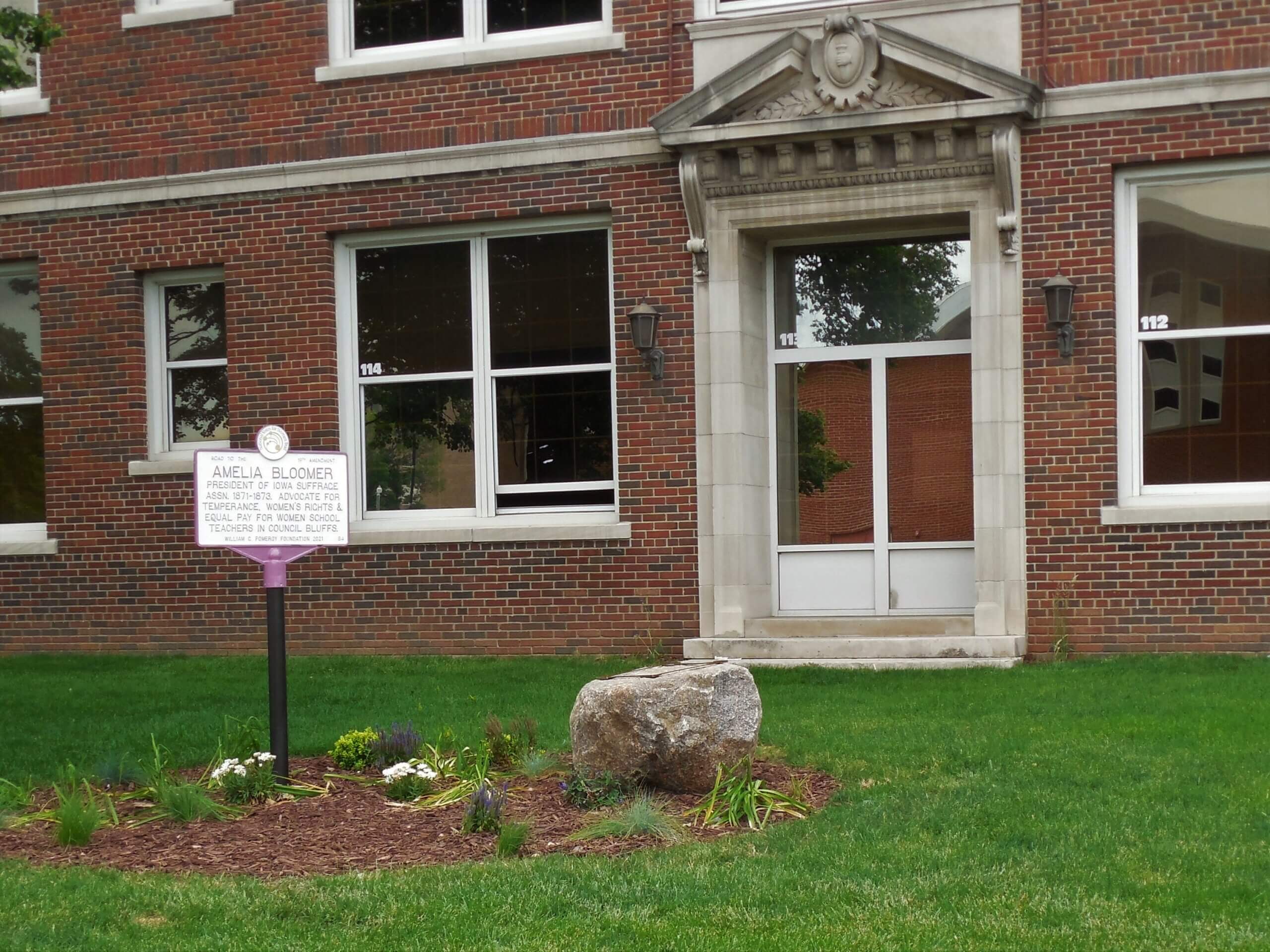
- 210 S 7th St, Council Bluffs, IA 51501, USA
- 41.2586, -95.8551
-
National Collaborative for Women's History Sites
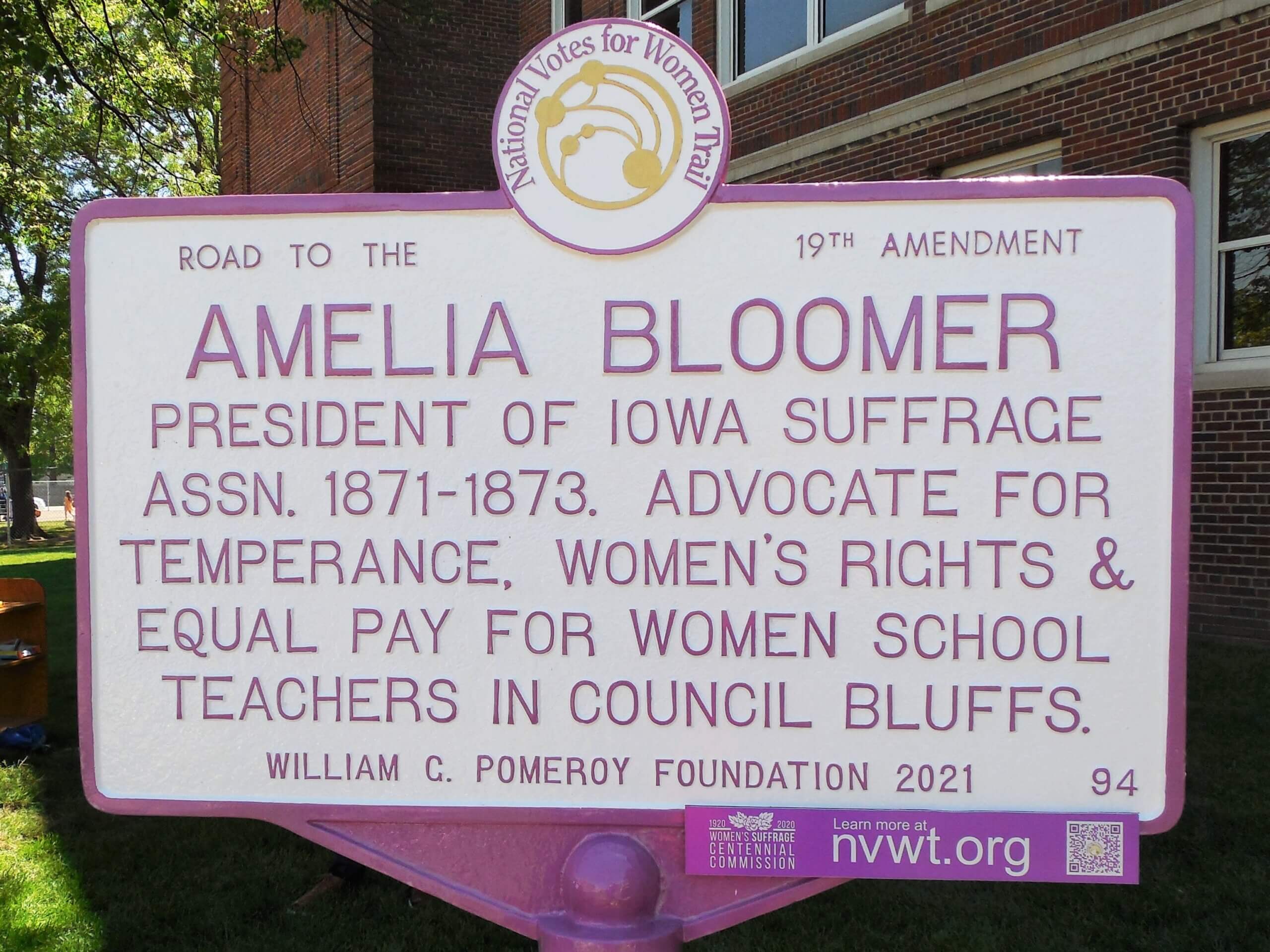
AMELIA BLOOMER
Inscription
AMELIA BLOOMERPRESIDENT OF IOWA SUFFRAGE
ASSN. 1871-1873. ADVOCATE FOR
TEMPERANCE, WOMEN'S RIGHTS &
EQUAL PAY FOR WOMEN SCHOOL
TEACHERS IN COUNCIL BLUFFS.
WILLIAM G. POMEROY FOUNDATION 2021
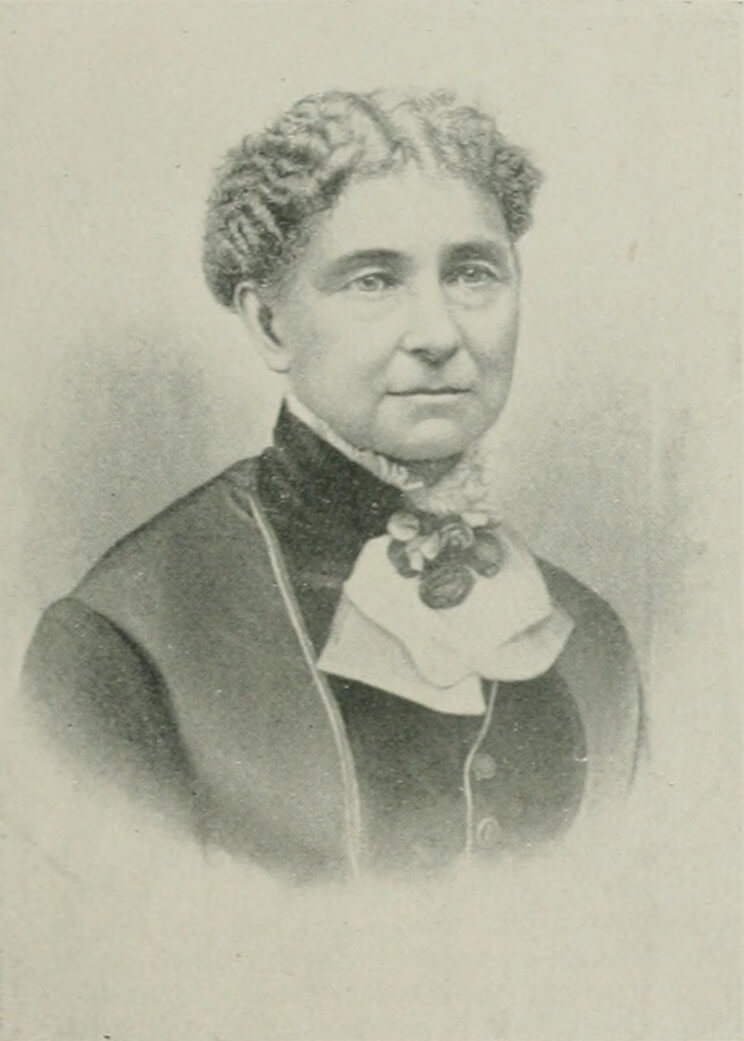
Amelia Jenks Bloomer (1818-1894) was a temperance and women’s rights advocate who fought for women’s right to vote. Originally from the state of New York, she had settled in Council Bluffs, Iowa by 1855. Before her move to Council Bluffs, Bloomer had established and was editor and publisher of The Lily, believed to be the first newspaper by and for women. Her move had necessitated the selling of The Lily to Mary Birdsall.
Bloomer and her husband, Dexter, became influential members of the community in Council Bluffs, helping to establish the public-school system and library. Shortly after her 1894 death, her husband published the Life and Writings of Amelia Bloomer. According to the preface, his goal in publishing this collection was to create a record of Bloomer’s lifelong pioneering work. In it, her husband highlights Bloomer’s advocacy for women teachers in Council Bluffs:
In the early days of Council Bluffs, not a few of the teachers in the public schools resided in her family. They were mostly young women and she always strove to afford to them a pleasant and comfortable home. She ever insisted that the wages of young women employed as teachers by the school board should be the same as those paid to men. Her position was that, so long as they did an equal amount of work and did it equally well, they should receive equal pay, and this is an argument which never had been and never can be successfully answered, although school boards continue to set it aside as unworthy of their consideration.
From 1871 to 1873, Bloomer served as president of the Iowa Suffrage Association. She continued to advocate for temperance and women’s rights for the remainder of her life. Women in Iowa won partial suffrage in 1894, and were then able to vote on municipal bond and tax questions and in school elections. After the tireless efforts of Iowa suffragists, a women’s suffrage resolution passed through the Iowa legislature and was placed before the voters of Iowa on a statewide ballot. However, the women’s suffrage resolution was voted down.
On June 4, 1919, the United States Congress passed the Nineteenth Amendment which states, “The right of citizens of the United States to vote shall not be denied or abridged by the United States or by any state on account of sex.” That July, the Iowa legislature ratified the Nineteenth Amendment and by August 1920, the necessary 36 states had ratified the amendment, securing women’s right to vote across the United States.