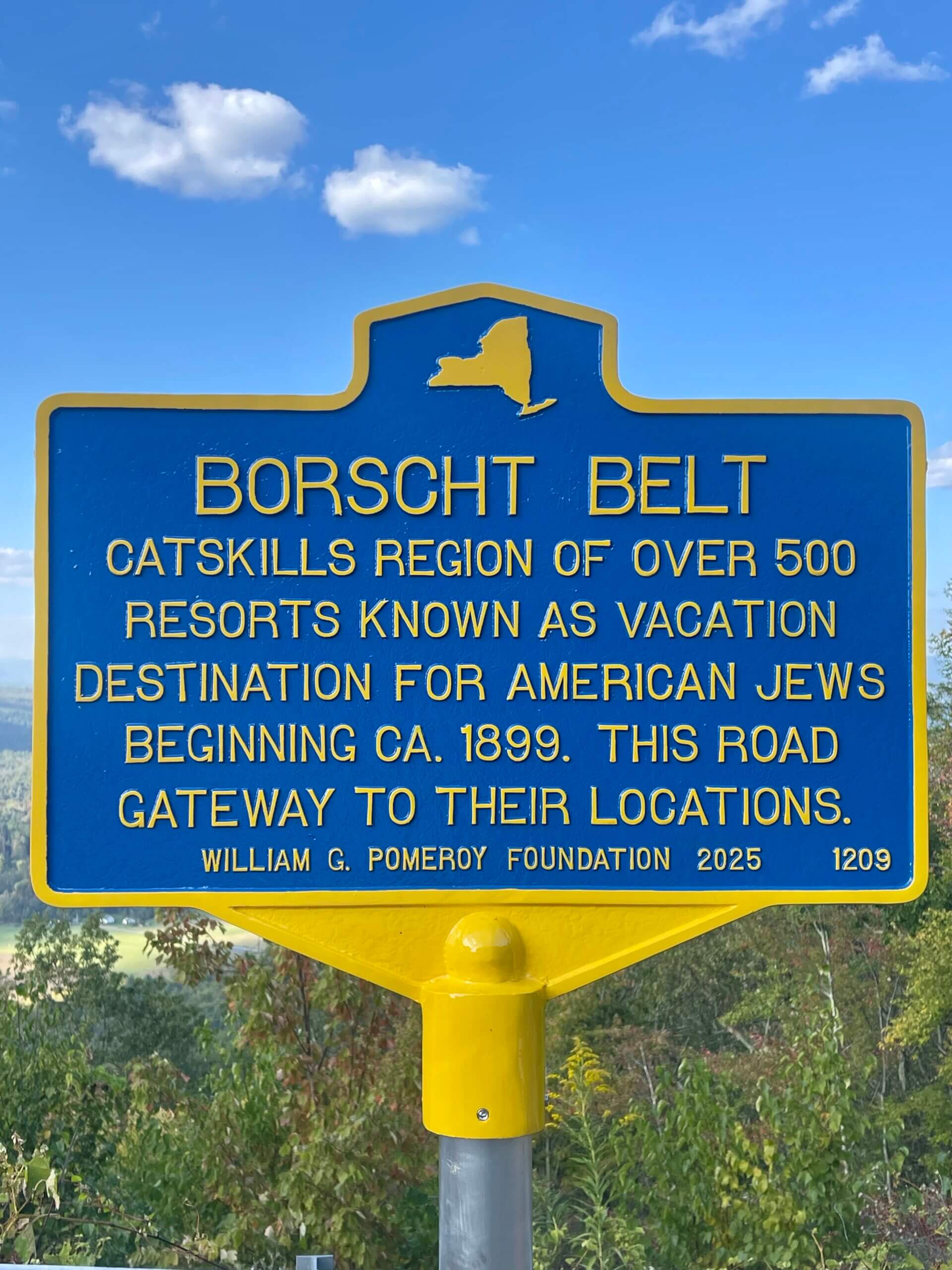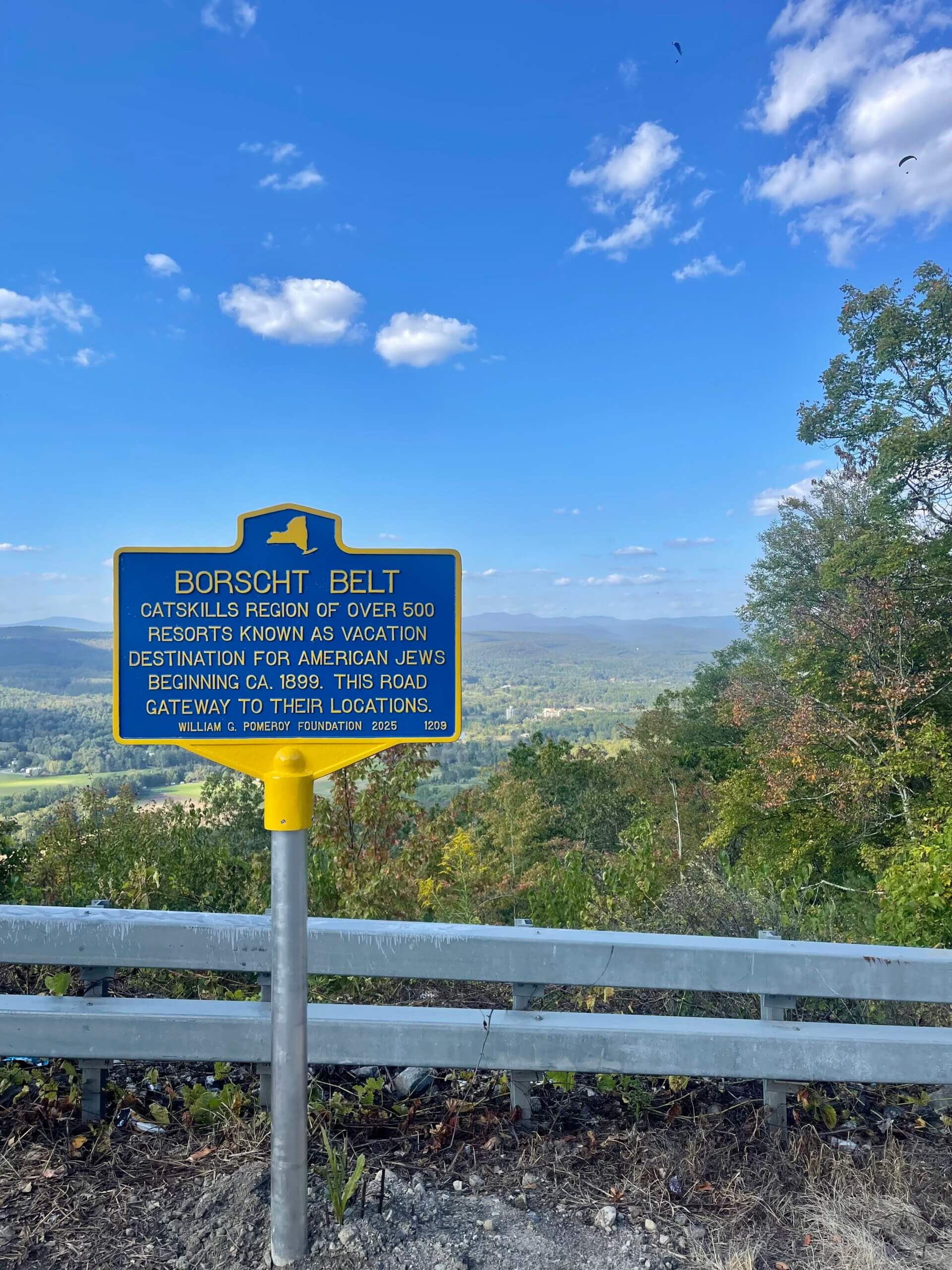
BORSCHT BELT
- Program
- Subject
- Location
- Lat/Long
- Grant Recipient
-
NYS Historic
-
Event, Site
- MHFW+QH, Cragsmoor, NY 12566, USA
- 41.67446, -74.40347
-
Sullivan County Historical Society
BORSCHT BELT
Inscription
BORSCHT BELTCATSKILLS REGION OF OVER 500
RESORTS KNOWN AS VACATION
DESTINATION FOR AMERICAN JEWS
BEGINNING CA. 1899. THIS ROAD
GATEWAY TO THEIR LOCATIONS.
WILLIAM G. POMEROY FOUNDATION 2025
The Borscht Belt region was comprised of both Sullivan and Ulster Counties. Beginning in the 1890s, during a time when Jews in America was excluded from many spaces that provided social access, the Borscht Belt was created as a place of refuge for the Jewish community. What began as small farmhouses and boarding houses morphed into over 500 hotels, 50,000 bungalows and 1,000 rooming houses scattered across Sullivan County and parts of Ulster County in New York’s Catskill Mountains. They provided relaxation, dancing and entertainment. By the 1950s, more than a million people spent their summer vacations in these hotels and summer camps. Additionally, many young college students relied on the wages earned working in these summer resorts to finance their educations. (Jewish Scholars study history, cultural significance of the Borscht Belt, Richard Morin. The Brown University News Bureau, November 29, 1995)
Early advertising by railroad companies played a role in growing this vacation destination. The New York, Ontario & Western Railway published “Summer Homes Among the Mountains” in 1899 which listed the Rock Hill Jewish Boarding House located in Glen Wild, Sullivan County. Owner J. Gerson stated his newly-furnished house provided “Jewish faith and customs throughout.”
The Borscht Belt saw a decline in the 1980s and 1990s due to several factors such as the rise of inexpensive airfare and generational changes. (Borscht Belt Historical Marker Project. Accessed 18 May 2025)