CANAL STOREHOUSE
- Program
- Subject
- Location
- Lat/Long
- Grant Recipient
-
Historic Transportation Canals
-
Industry & Commerce, Transportation
- 2739 NY-48, Minetto, NY 13115, USA
- 43.39687, -76.472033
-
Town of Minetto
CANAL STOREHOUSE
Inscription
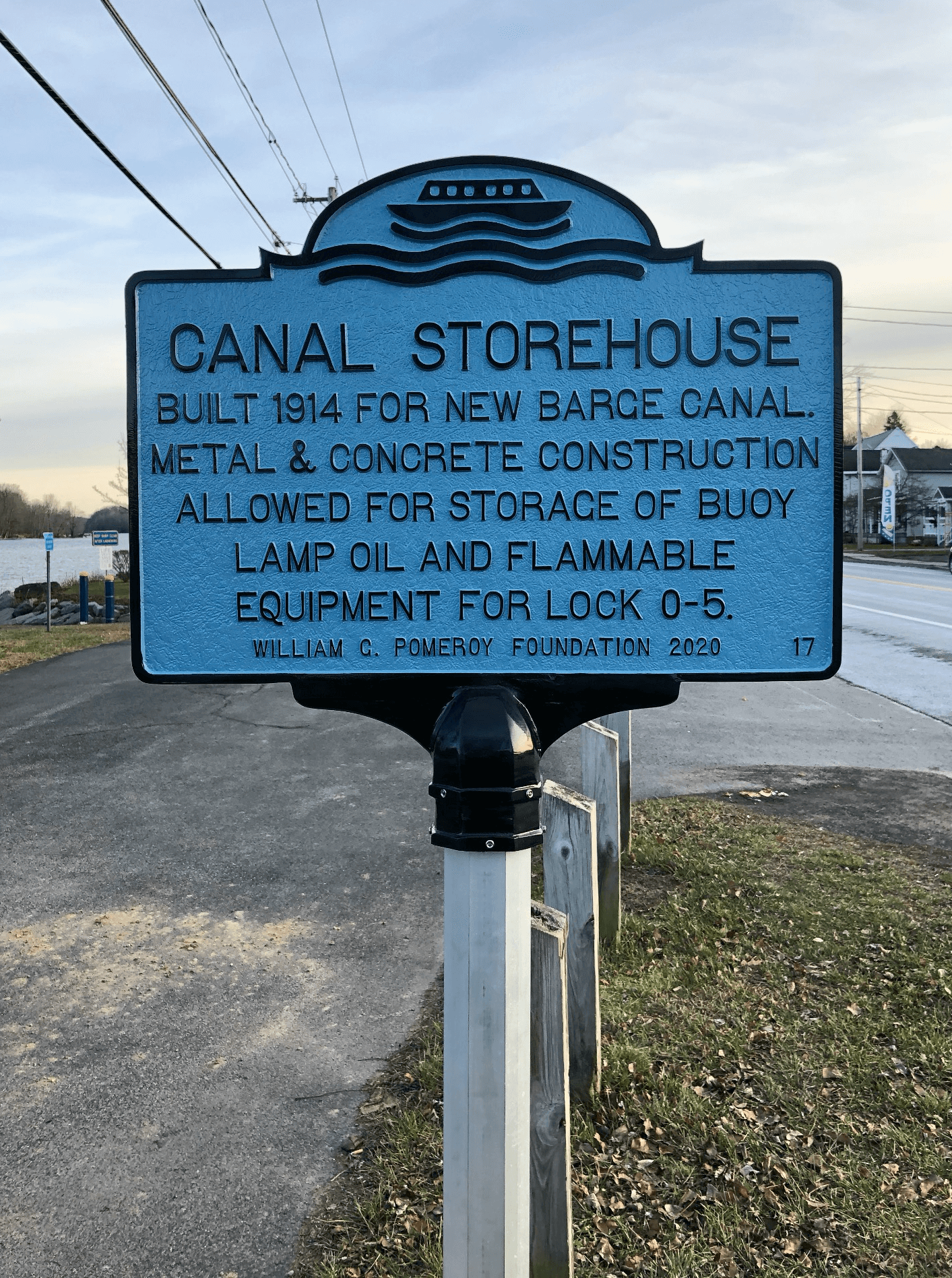
CANAL STOREHOUSEBUILT 1914 FOR NEW BARGE CANAL.
METAL & CONCRETE CONSTRUCTION
ALLOWED FOR STORAGE OF BUOY
LAMP OIL AND FLAMMABLE
EQUIPMENT FOR LOCK 0-5.
WILLIAM G. POMEROY FOUNDATION 2020
The Erie Canal is a man-made waterway that fundamentally changed the history of New York State. It connected the interior of the United States from the Great Lakes to the Atlantic Ocean. An amazing feat of modern engineering, the Erie Canal traversed the complex geography of NY state, and in many instances utilized natural waterways and lakes as a means of reaching communities around New York. Over the years, several different canals branched off from the main Erie Canal. One such example is the Oswego Canal.
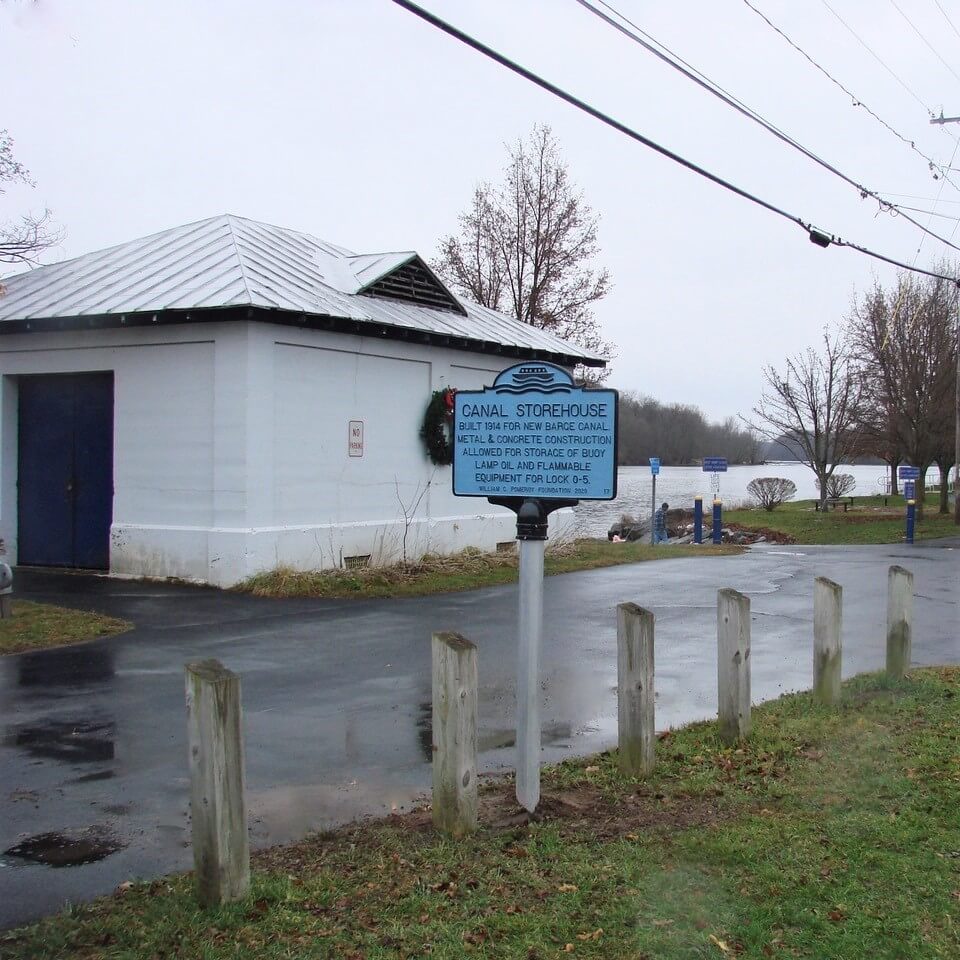
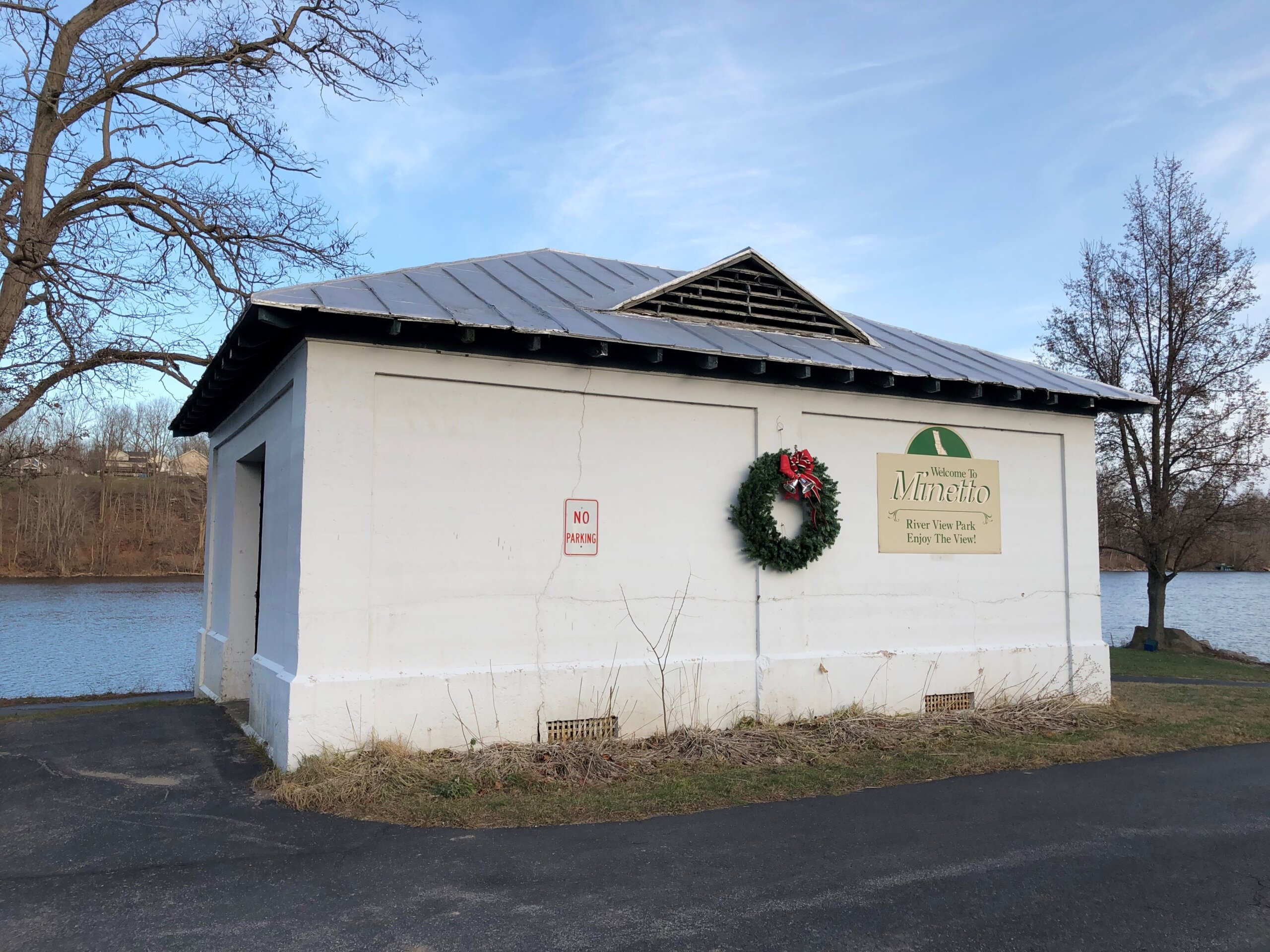
Formed by the Seneca and Oneida rivers, the Oswego River flows north from the Village of Phoenix to Lake Ontario. Completed circa 1828, the Oswego Canal incorporated a series of dams and five locks. This allowed boats to navigate the Oswego River with ease and advanced trade. The Oswego Canal underwent a series of improvements over the years to accommodate the increase in boat traffic. Around 1914 a new barge canal was planned for the Oswego Canal. A dam known as lock 0-5 and a canal storehouse is located in the small town of Minetto. Built in 1914 for the new barge canal, the storehouse was constructed out of metal and concrete. It was used to store buoy lamp oil and other flammable equipment required by Lock 0-5.
As of 2020, the structure still stands and looks much like it did then. It has since been repurposed to serve as restrooms for a public park and boat launch situated along the river.