GERTRUDE WARREN
- Program
- Subject
- Location
- Lat/Long
- Grant Recipient
-
NYS Historic
-
People
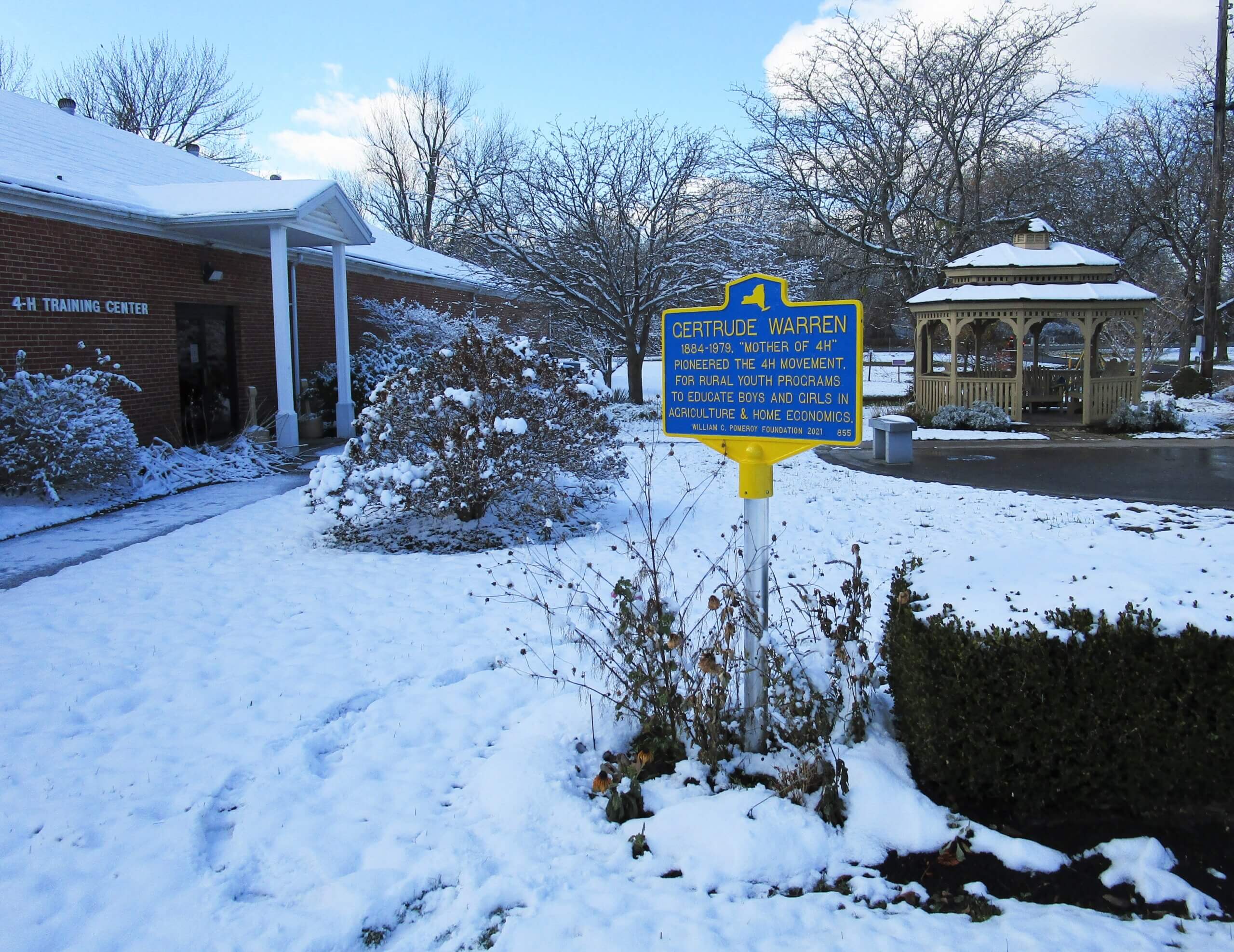
- 4505 Lake Ave, Lockport, NY 14094, USA
- 43.19158997254, -78.674145734206
-
Cornell Cooperative Extension of Niagara County
GERTRUDE WARREN
Inscription
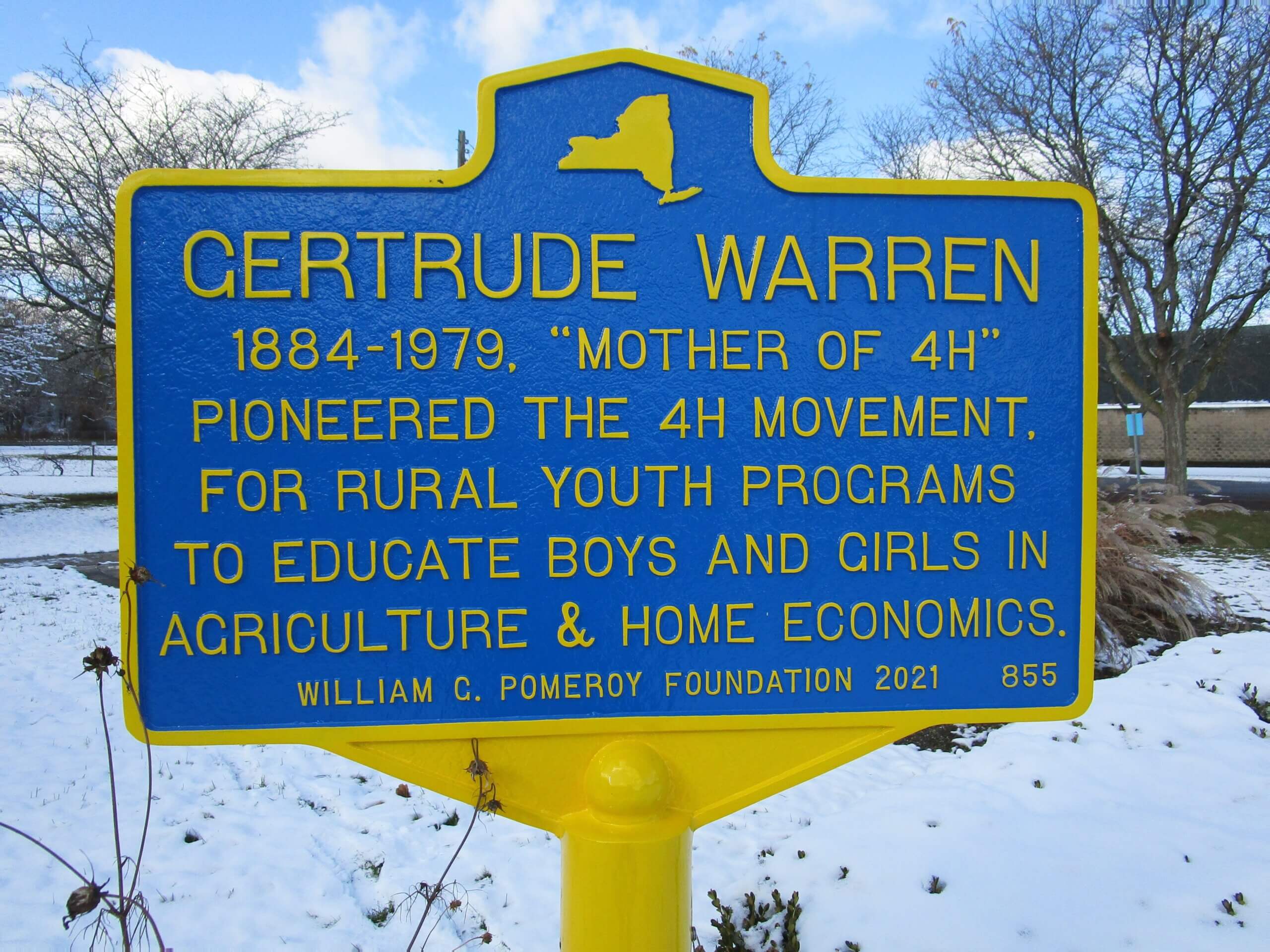
GERTRUDE WARREN1884-1979, "MOTHER OF 4H"
PIONEERED THE 4H MOVEMENT,
FOR RURAL YOUTH PROGRAMS
TO EDUCATE BOYS AND GIRLS IN
AGRICULTURE & HOME ECONOMICS.
WILLIAM G. POMEROY FOUNDATION 2021
In 1917, Gertrude Warren, a native of Lockport, NY, moved to Washington, D.C. to lead the U.S. Department of Agriculture’s Extension Service 4-H program. By the late nineteenth century, farm youth organizations became popular as a means of instructing children on topics often not taught in school. The U.S. Department of Agriculture described the purpose of the 4-H program in their 1918 Curricular 66 publication:
“…to interest boys and girls, and through them, adults in farm, home, and rural community problems; to train them in better methods of farming, gardening, poultry and animal husbandry, and home practices…and to socialize farm and rural life through boys’ and girls’ club activities by developing rural leadership, community cooperation, and a good spirit of citizenship.”
It was not until the 1920s that the program adopted the name “4-H,” which represented “Head, Heart, Hands, and Health.” Unlike other farming clubs at the time, 4-H was less restrictive and accepted participants ages 10 to 21 from rural and urban communities. On December 31, 1952 in the Fremont Guide and Tribune, Gertrude described the club as “the product of many minds working in unison toward one goal – developing in young people a way of life built on self-help and the ability to look beyond their simple daily tasks to their place in the life of our nation.”
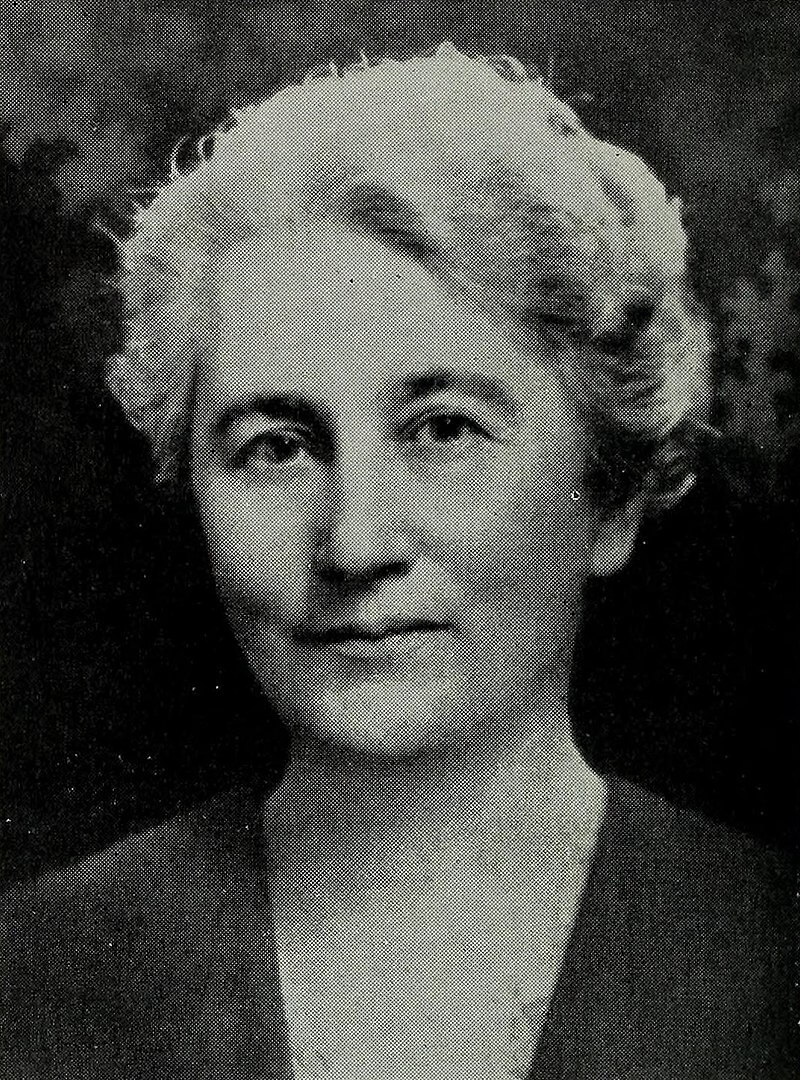
With advanced degrees in Home Economics and experience as a teacher, Gertrude was widely recognized as a dedicated and diligent educator. Throughout her career, she received many accolades for her commitment to 4-H and its participants, including the Order of the Three Stars by the Latvian government in 1939 and the Superior Service Award from the U.S. Department of Agriculture in 1949. Under her leadership, the program grew from 300,000 youth in 1917 to more than 2 million youth by 1951. She also consulted with foreign governments to establish 4-H programs internationally.
Gertrude Warren was regarded as the “Mother of 4-H” for her national and international development of 4-H into the program we recognize today. Following her retirement in 1952, Gertrude remained active in 4-H and other service-based clubs until her death in 1979.