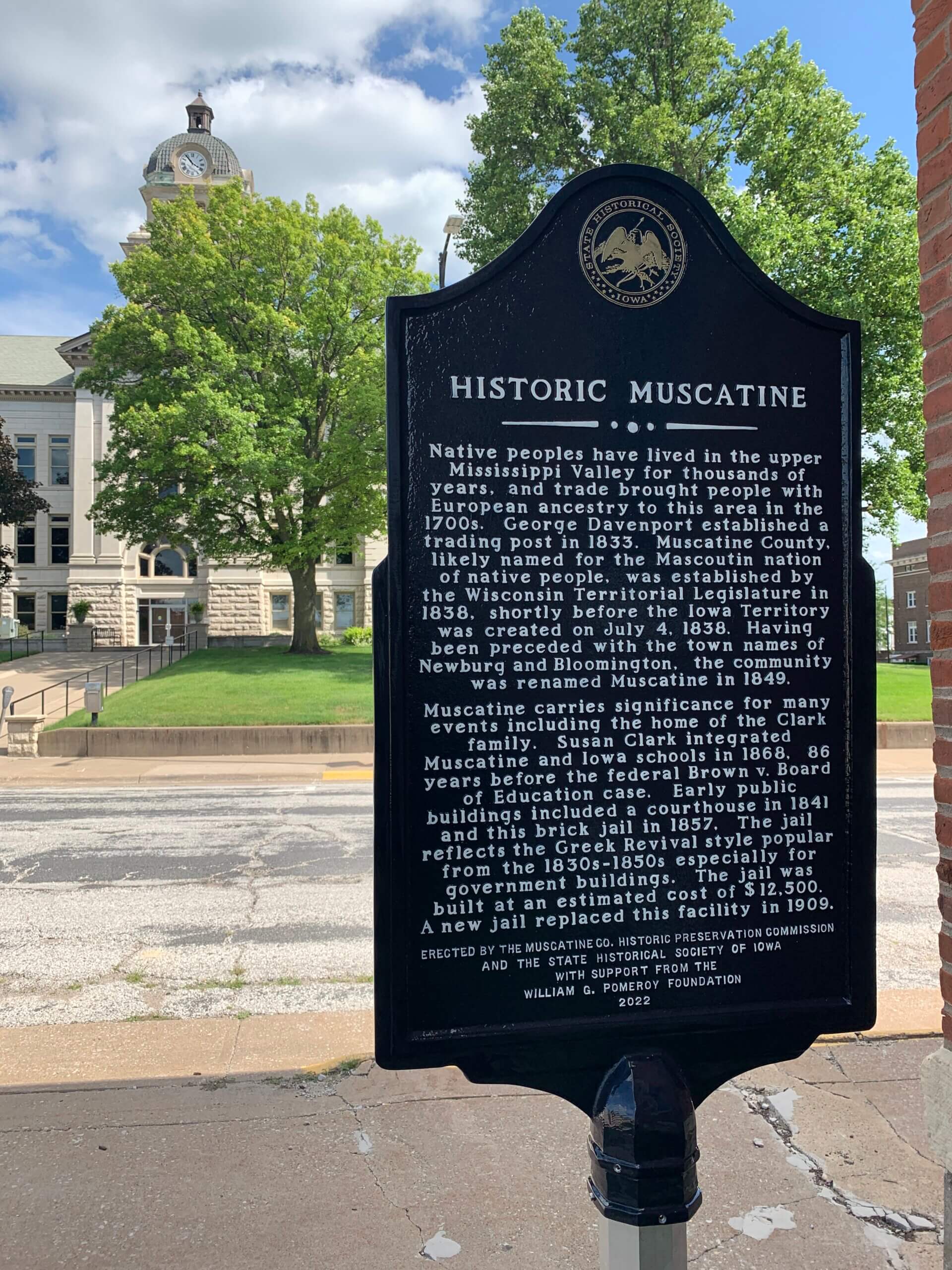
Historic Muscatine
- Program
- Subject
- Location
- Lat/Long
- Grant Recipient
-
State Historical Society of Iowa
-
Government
- 411 E 4th St, Muscatine, IA, USA
- 41.4250579, -91.044013
-
State Historical Society of Iowa
Historic Muscatine
Inscription
Historic MuscatineNative peoples have lived in the upper Mississippi Valley for thousands of years, and trade brought people with European ancestry to this area in the 1700s. George Davenport established a trading post in 1833. Muscatine County, likely named for the Mascoutin nation of native people, was established by the Wisconsin Territorial Legislature in 1838, shortly before the Iowa Territory was created on July 4, 1838. Having been preceded with the town names of Newburg and Bloomington, the community was renamed Muscatine in 1849.
Muscatine carries significance for many events including the home of the Clark family. Susan Clark integrated Muscatine and Iowa schools in 1868, 86 years before the federal Brown v. Board of Education case. Early public buildings included a courthouse in 1841, and this brick jail in 1857. The jail reflects the Greek Revival style that was popular from the 1830s-1850s, especially for government buildings. The columns surrounding the doorway and triangle form on the gables reflect the design of a Greek temple. The jail was built at an estimated cost of $12,500. A new jail replaced this facility in 1909.
Erected in 2021 in commemoration of Iowa’s 175th anniversary of statehood by
the Muscatine Historic Preservation Commission and the State Historical Society
of Iowa with funding from the William G. Pomeroy Foundation.