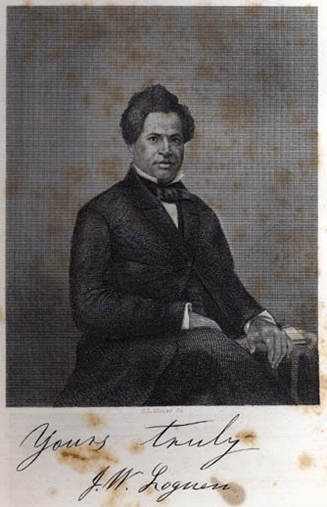
JERMAIN W. LOGUEN
- Program
- Subject
- Location
- Lat/Long
- Grant Recipient
-
NYS Historic, Pomeroy Education Program
-
People, Site
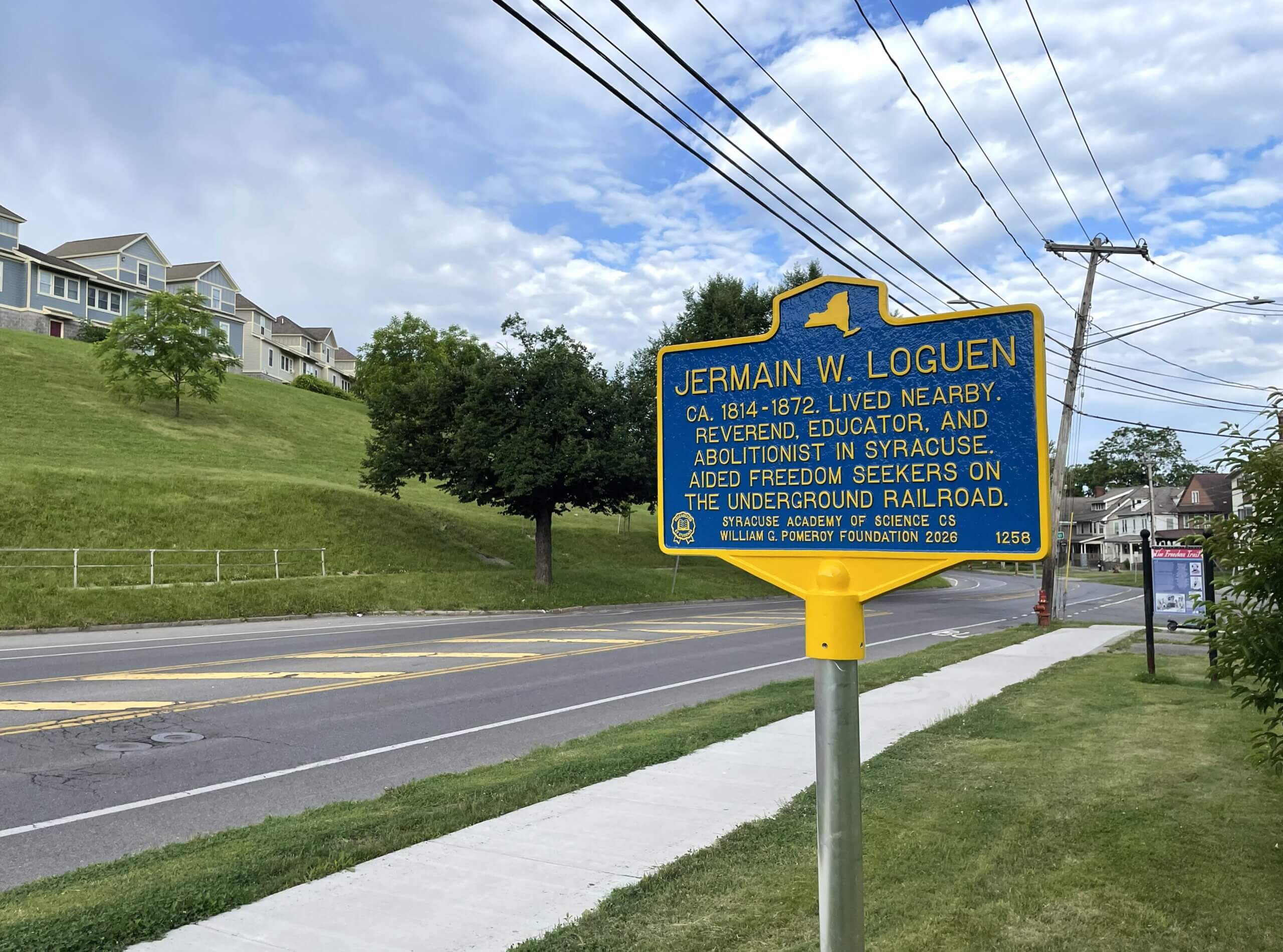
- 1720 E Genesee St, Syracuse, NY 13210, USA
- 43.046800087662, -76.122994136355
-
Syracuse Academy of Science Charter School
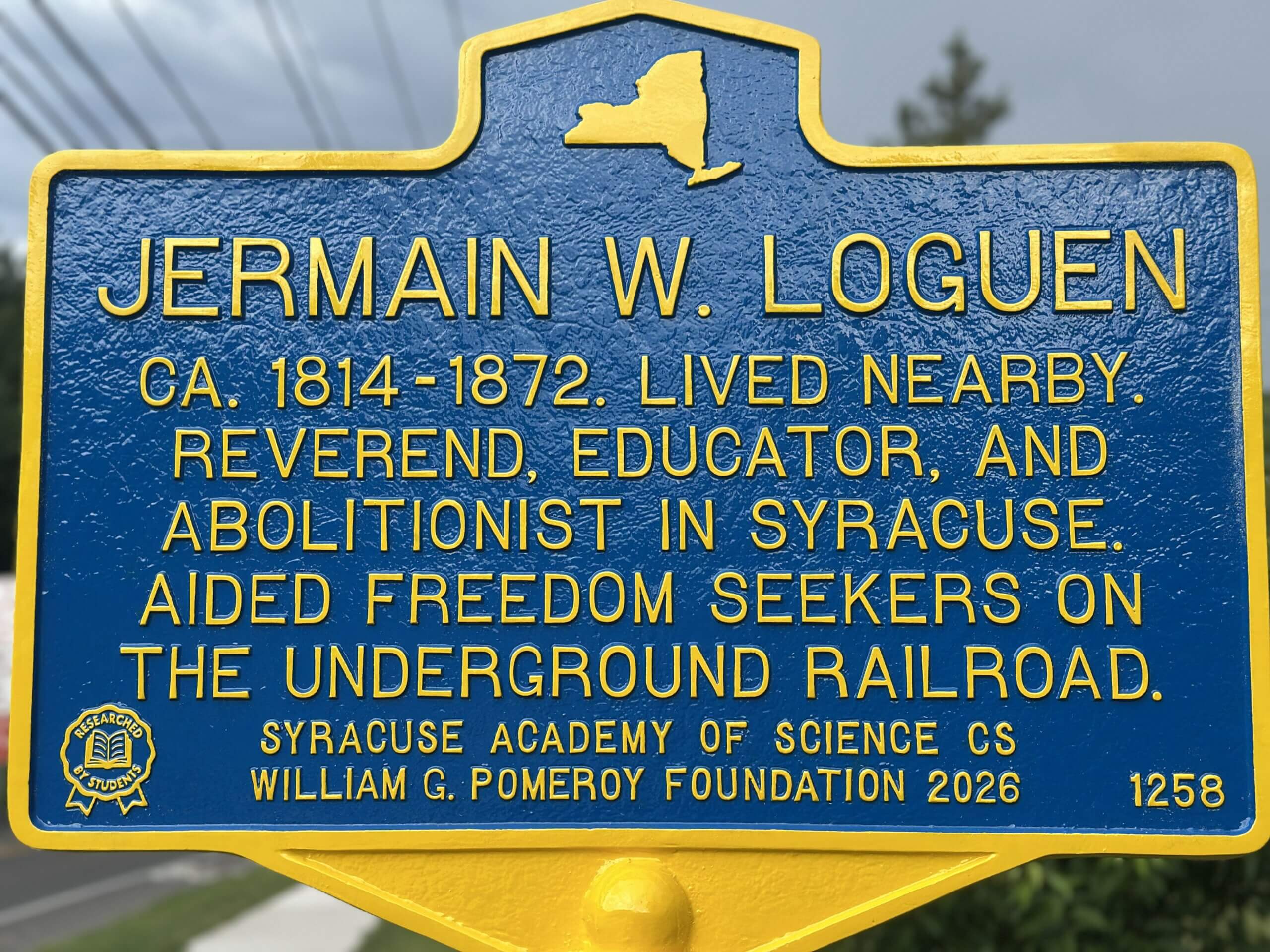
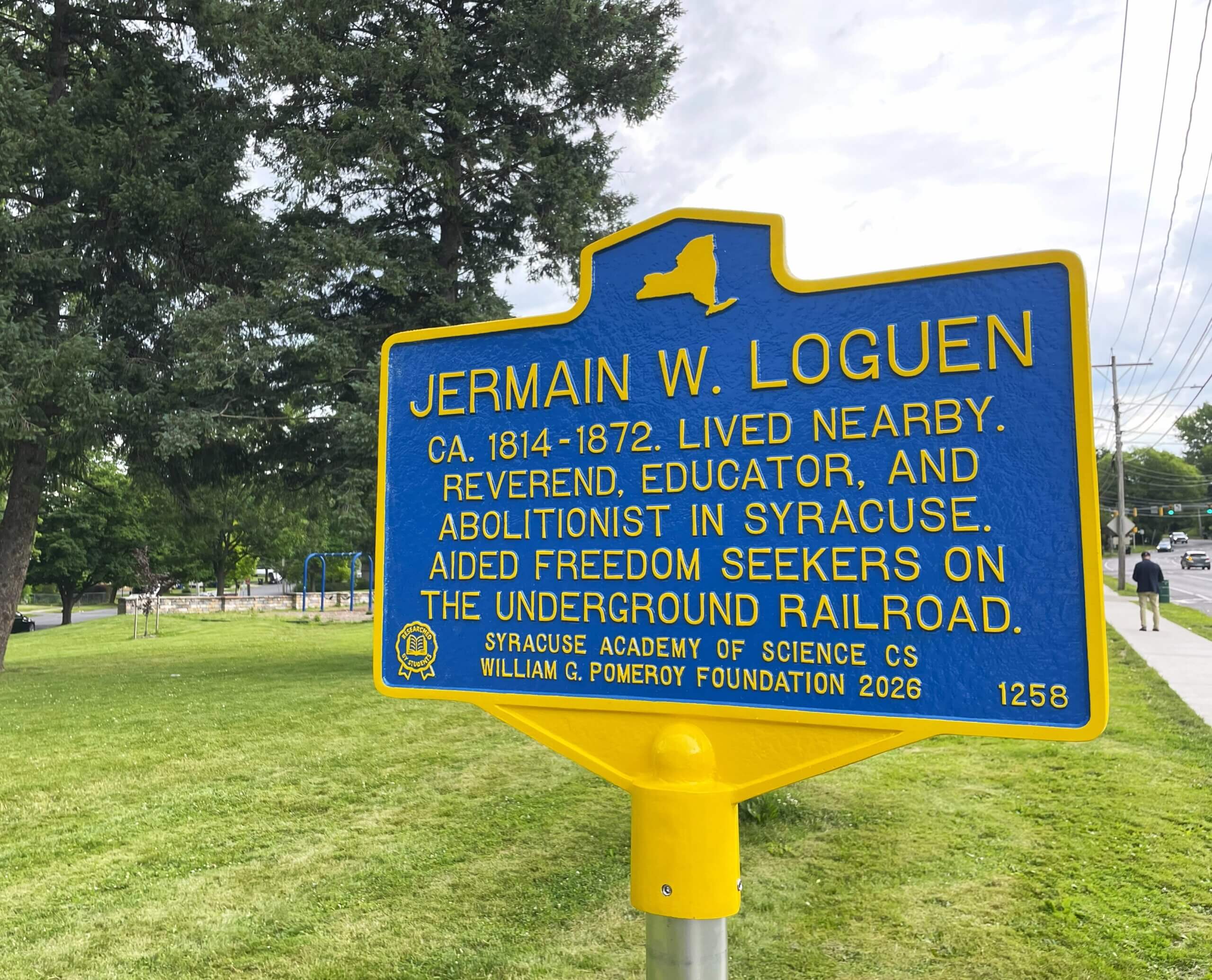
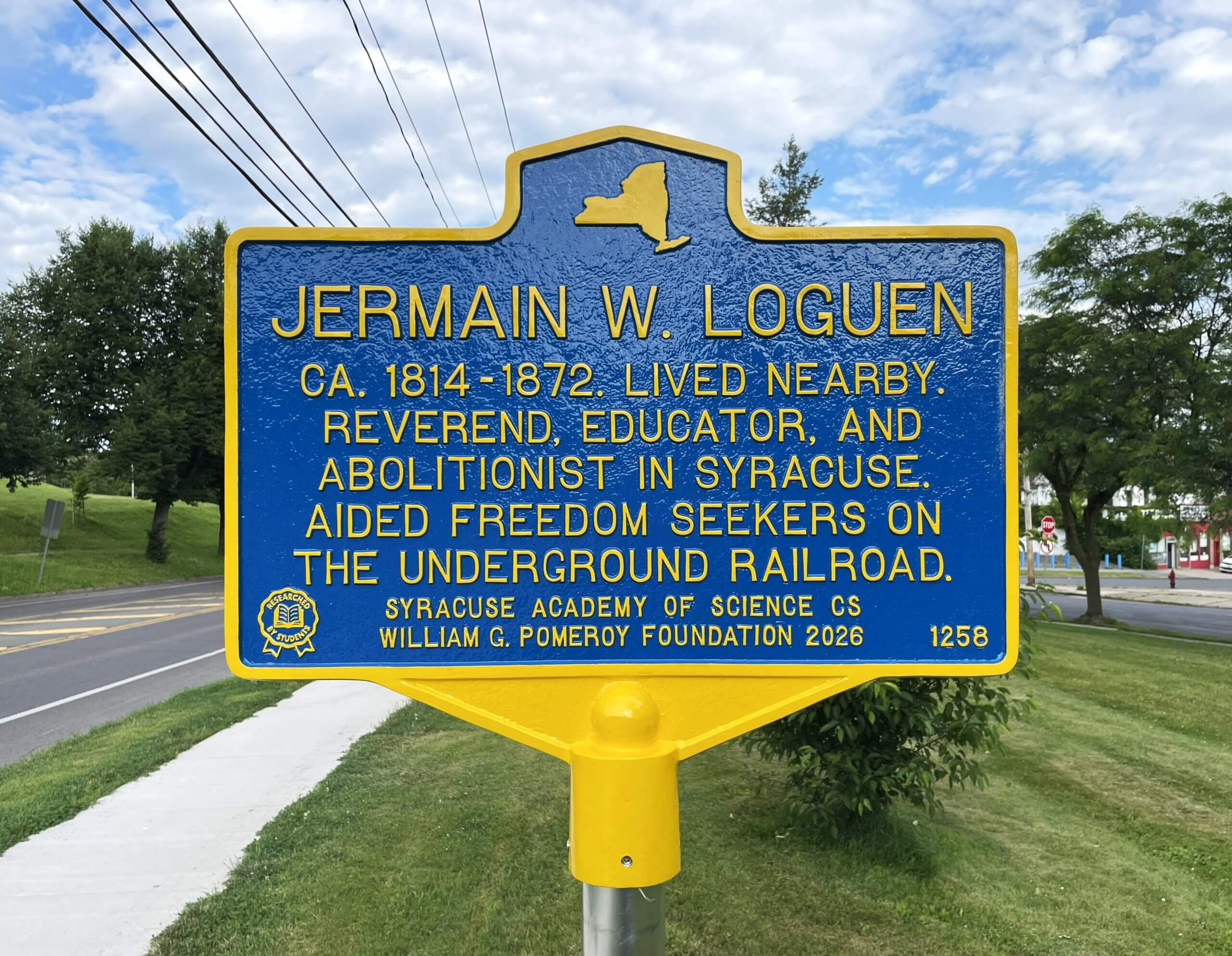
JERMAIN W. LOGUEN
Inscription
JERMAIN W. LOGUENCA. 1814-1872. LIVED NEARBY.
REVEREND, EDUCATOR, AND
ABOLITIONIST IN SYRACUSE.
AIDED FREEDOM SEEKERS ON
THE UNDERGROUND RAILROAD.
SYRACUSE ACADEMY OF SCIENCE CS
WILLIAM G. POMEROY FOUNDATION 2026
The Reverend Jermain Wesely Loguen was born, as Jarm Logue, in the early 1800s- likely sometime between 1809 and 1815- into slavery in Tennessee. He escaped enslavement at age 21 with help from his mother, Cherry, and followed the Underground Railroad north to Canada.
Loguen eventually made his way to Central New York in the 1830s. He attended the Oneida Institute in Utica, where he met his wife, Caroline, and established his first school for African American children. In 1841 he began teaching in a school in Syracuse. Throughout the 1840s he spent time as a minister and teacher in the cities of Bath, Ithaca, and Troy. During this time, he established multiple schools for African American children in many small cities across Upstate New York.
In 1848, he purchased a plot of land in Syracuse on the corner of Pine and E. Genesee Streets and built a house- one of 13 properties he would own in Syracuse over his lifetime. The home built here was specially designed to enable them to host freedom seekers, and over the next two and a half decades the home became one of the most successful Underground Railroad depots. Jermain and Caroline actively advertised the location in newspapers, and Loguen wrote to Frederick Douglass with reports on Railroad activity to be published in his newspaper. They fed, clothed, concealed, educated, and enabled those escaping enslavement to continue travelling north towards Canada. Unfortunately, the home is no longer standing, torn down in the 1980s.
Loguen became known as the “King of the Underground Railroad”. It is estimated that he and Caroline helped save over 1,500 people at his depot. In addition to aiding freedom seekers, he actively campaigned for abolition, working with Frederick Douglass and others as a writer, orator, and educator.
A notable example of this was in October of 1850, following the passing of the Fugitive Slave Law. The abolitionists of Syracuse held a gathering at City Hall and asked Loguen to speak. Loguen addressed the crowd, appealing to them as his long-time neighbors and as an openly fugitive slave. In his autobiography, Loguen recalled at this meeting the overwhelming support of the people of Syracuse for himself and other enslaved people, and a near total rejection of the new law. There was a widespread refusal among the people to enforce it. In fact, following his plea that Syracuse be made an “open city” for fugitive slaves, the people of Syracuse at the meeting voted 395 to 96 in favor of his proposal to enact this civil disobedience.
Loguen is also known for having refused to purchase his freedom, as many others who could did during this time, on the principle of it having been his “God-given gift” all along. Loguen wrote an autobiography in 1859, titled “The Rev. J. W. Loguen, as a Slave and as a Freeman, a Narrative of Real Life”. The book was distributed widely among abolitionists, and the full story of his enslaved childhood and escape was of great interest as he was already a well-known orator and writer for the abolitionist cause.
Loguen worked as a pastor for the AME Zion Church in Syracuse for decades and was appointed as a Bishop in 1868. He held the post for three years before passing away on September 30, 1872. It was reported that he had contracted an illness the year before on a visit to Tennessee from which he did not recover, which is now thought to be tuberculosis. He is buried in Oakwood Cemetery in Syracuse.
One of his daughters, Amelia, married the son of Frederick Douglass, and continued to campaign for African American rights. Another daughter, Sarah, is known for becoming one of the first African American woman to become a licensed medical practitioner.
Learn more at the UGRR Freedom Center.
The student-led application for this grant came from students at the Syracuse Academy of Science Charter School, led by instructor Donald Dwyer. The students researched Jermain W. Loguen, then gathered and submitted the required materials for the historical marker as part of our Pomeroy Education Program.