MUD LOCK 5
- Program
- Subject
- Location
- Lat/Long
- Grant Recipient
-
NYS Historic, Pomeroy Education Program
-
Site, Transportation
- 77 Cold Springs Trail, Liverpool, NY 13090, USA
- 43.123678, -76.249497
-
Liverpool Public Library
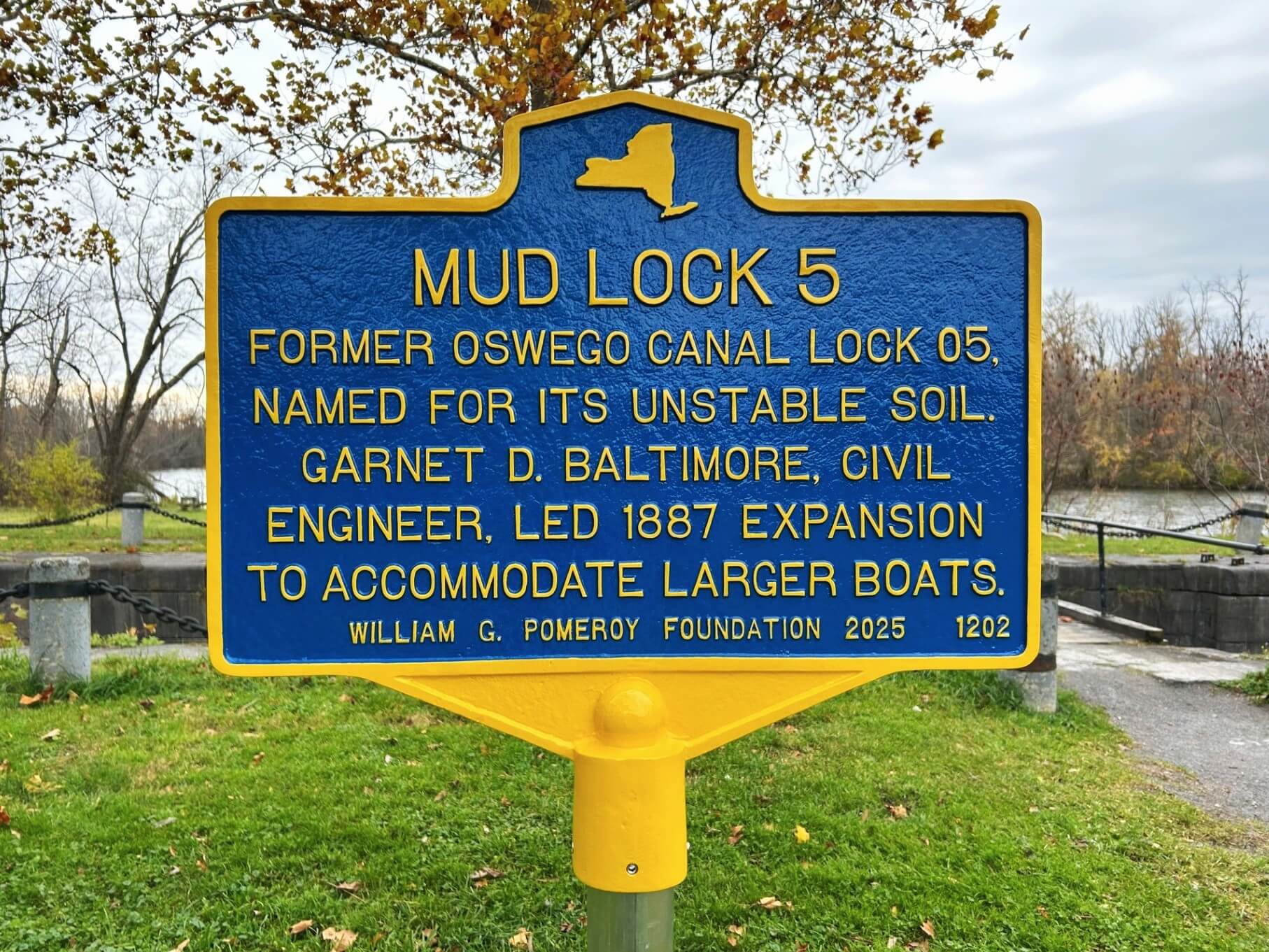
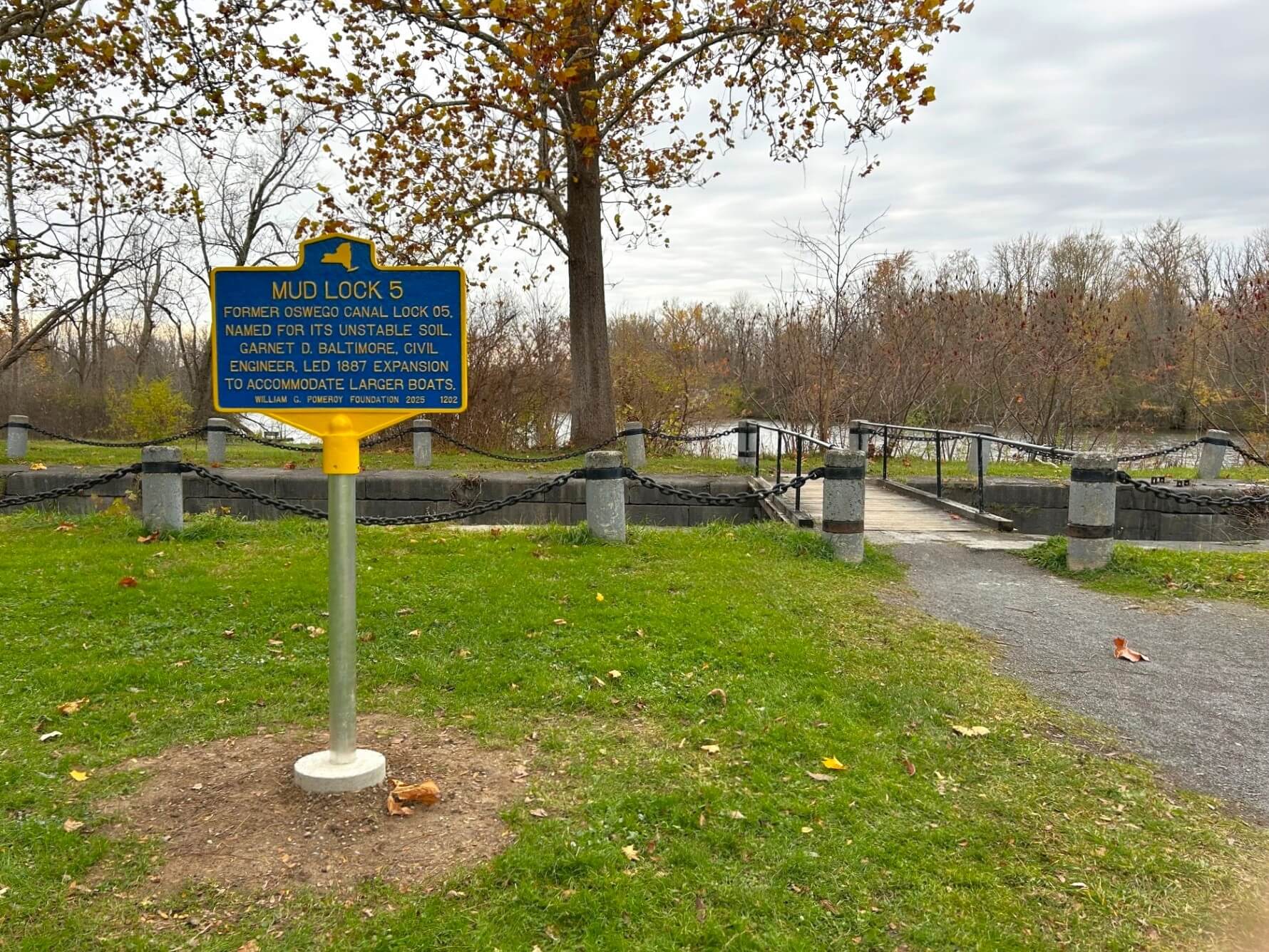
MUD LOCK 5
Inscription
MUD LOCK 5FORMER OSWEGO CANAL LOCK O5,
NAMED FOR ITS UNSTABLE SOIL.
GARNET D. BALTIMORE, CIVIL
ENGINEER, LED 1887 EXPANSION
TO ACCOMMODATE LARGER BOATS.
WILLIAM G. POMEROY FOUNDATION 2025
Officially known as Oswego Canal Lock O5 at the time it was constructed in 1828, the mud lock was rebuilt and enlarged several times. Completed in 1829, the Oswego Canal stretched from Lake Ontario to the Erie Canal in downtown Syracuse. In 1887, Garnet D. Baltimore, a civil engineer and first Black graduate of Rensselaer Polytechnic Institute, was hired to help extend the length of the lock to accommodate the longer canal boats. The “mud lock” gained its nickname from the mud flats in area caused by shifting and unsteady soil akin to quicksand. The sturdy stone walls that as of 2025 were still standing are a testament to Baltimore’s engineering skills.
After the 1903 Barge Canal Act was passed, the Oswego Canal was incorporated into the expansion and terminated at Three Rivers where the Oswego, Seneca and Oneida Rivers meet. (ConsidertheSourceNY.org. Accessed 30 April 2025)
The student-led application for this grant came from the Liverpool Public Library, which ran a “Homeschool Teen/Tween Research Project: Local Historical Marker Initiative” program guided by Jeanie Godly. Homeschooled students in the Syracuse, NY area researched Mud Lock 5’s history, then gathered and submitted the required materials for the historical marker as part of our Pomeroy Education Program.