WILLOW SHOP
- Program
- Subject
- Location
- Lat/Long
- Grant Recipient
-
NYS Historic, Pomeroy Education Program
-
Building, Industry & Commerce
- 314 2nd St, Liverpool, NY 13088, USA
- 43.103666, -76.209122
-
Liverpool Public Library
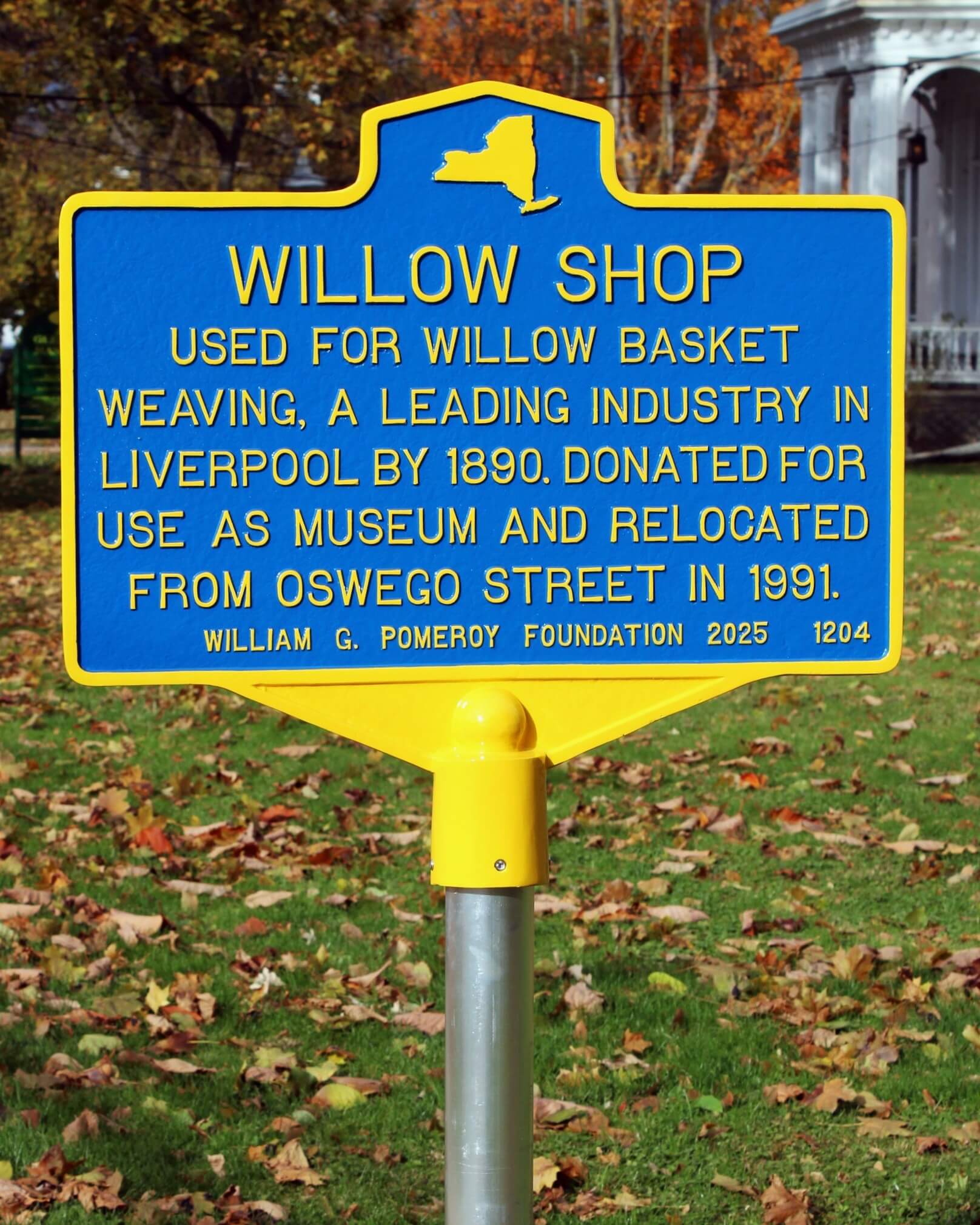
WILLOW SHOP
Inscription
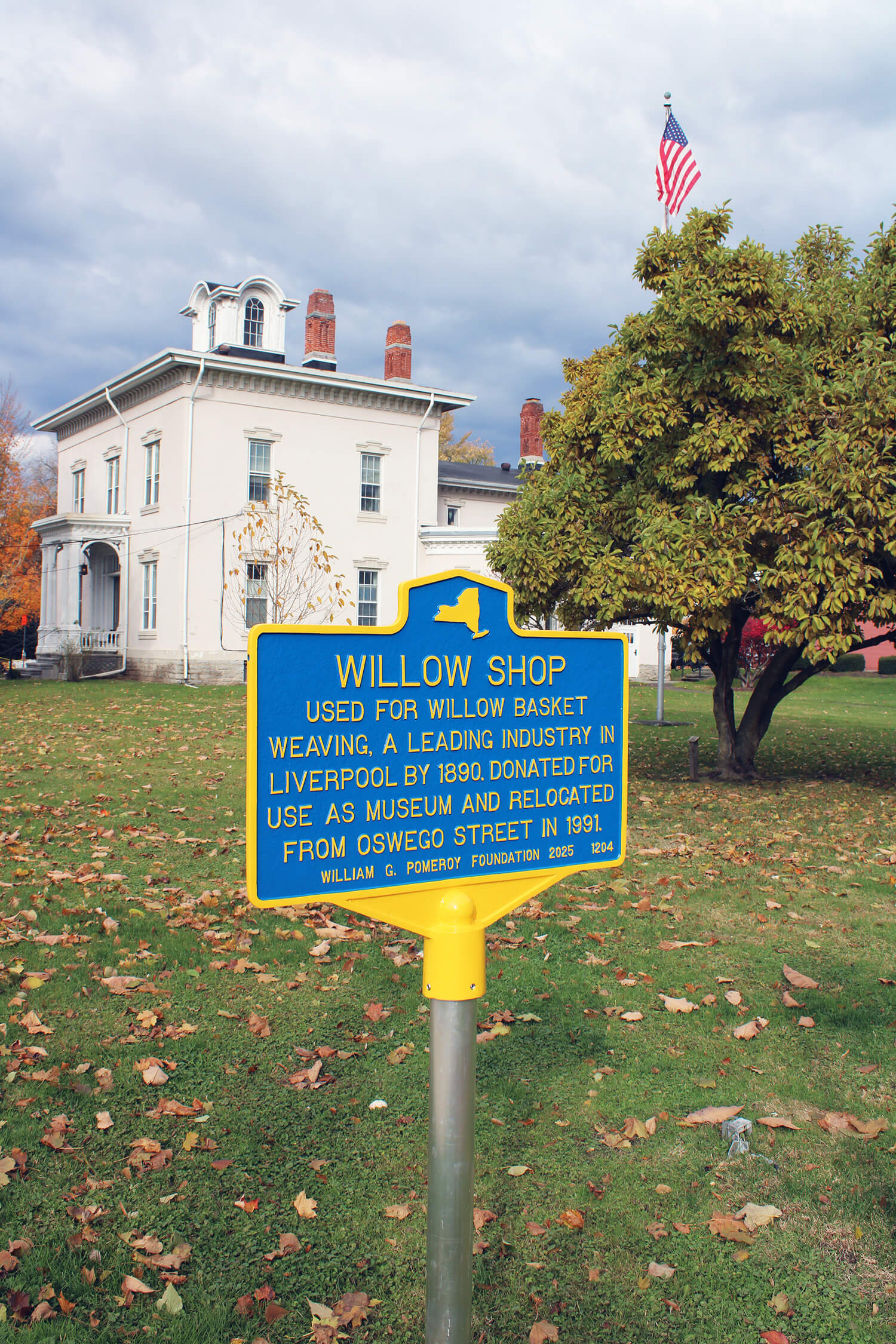
WILLOW SHOPUSED FOR WILLOW BASKET
WEAVING, A LEADING INDUSTRY IN
LIVERPOOL BY 1890. DONATED FOR
USE AS MUSEUM AND RELOCATED
FROM OSWEGO STREET IN 1991.
WILLIAM G. POMEROY FOUNDATION 2025
In the village of Liverpool in Onondaga County sits the Liverpool Willow Museum, a small museum that encapsulates a significant aspect in the history of this community. The museum is housed in a former willow shop that was used in the process of willow basket weaving, a leading industry in Liverpool by 1890. The shop was donated for use as a museum and moved from its former location on Oswego Street to the lawn of the historic Gleason Mansion in 1991, with the museum opening in 1994. The museum is operated by the Historical Association of Greater Liverpool and residents past and present have donated Liverpool willow baskets and artifacts to its unique collection.
Made popular by Liverpool residents of German descent, willow basket weaving became the leading industry in the village by 1890. The June 26, 1890 Homer Republican reported that “$10,000 was paid Liverpool basket makes for wages in May” of that year. There would go on to be additional reports in local papers of the thousands of dollars paid to the willow basket weavers of Liverpool. The July 14, 1901 Post-Standard reported how the “Willow Basket Weaving Industry Makes Quaint Liverpool Picturesque” and the paper claimed that two thirds of the 1,200 inhabitants of Liverpool were involved in the industry. The article provided a picture of basket weaving in Liverpool at the time:
The basket makers are mostly Germans or of German descent and forty years ago when they began coming from the old country, they introduced this industry. The willows are supplied by the farmers for fifteen miles about and some are imported from Canada. The work is done in the homes and frequently the women and children help. … There is little other employment for the remaining people who do not make baskets.
Willow was harvested, steamed to soften, and then weavers would soak it in batches to make it pliable for weaving. The baskets would be used for utilitarian purposes, such as laundry baskets. Willow basket weaving run by family businesses operated in small willow shops located throughout the village. Each shop had an iconic window on the top floor from which merchandise was tossed into a wagon and brought away to be sold.
The industry began to die out in the 1920s, as Liverpool transformed into a “commuter community,” with better modes of transportation allowing residents to seek more lucrative employment outside of the village and the last of the commercial weavers ceased operations in the 1960s (Around Liverpool, Dorianne Elitharp Gutierrez and Joyce M. Mills, 2015, 8). The community now keeps the memory of this fundamental aspect of its history alive at the Liverpool Willow Museum, where members of the public can learn more about the industry that supported the residents of Liverpool for many years.
The student-led application for this grant came from the Liverpool Public Library, which ran a “Homeschool Teen/Tween Research Project: Local Historical Marker Initiative” program guided by Jeanie Godly. Homeschooled students in the Syracuse, NY area researched Willow Shop’s history, then gathered and submitted the required materials for the historical marker as part of our Pomeroy Education Program.