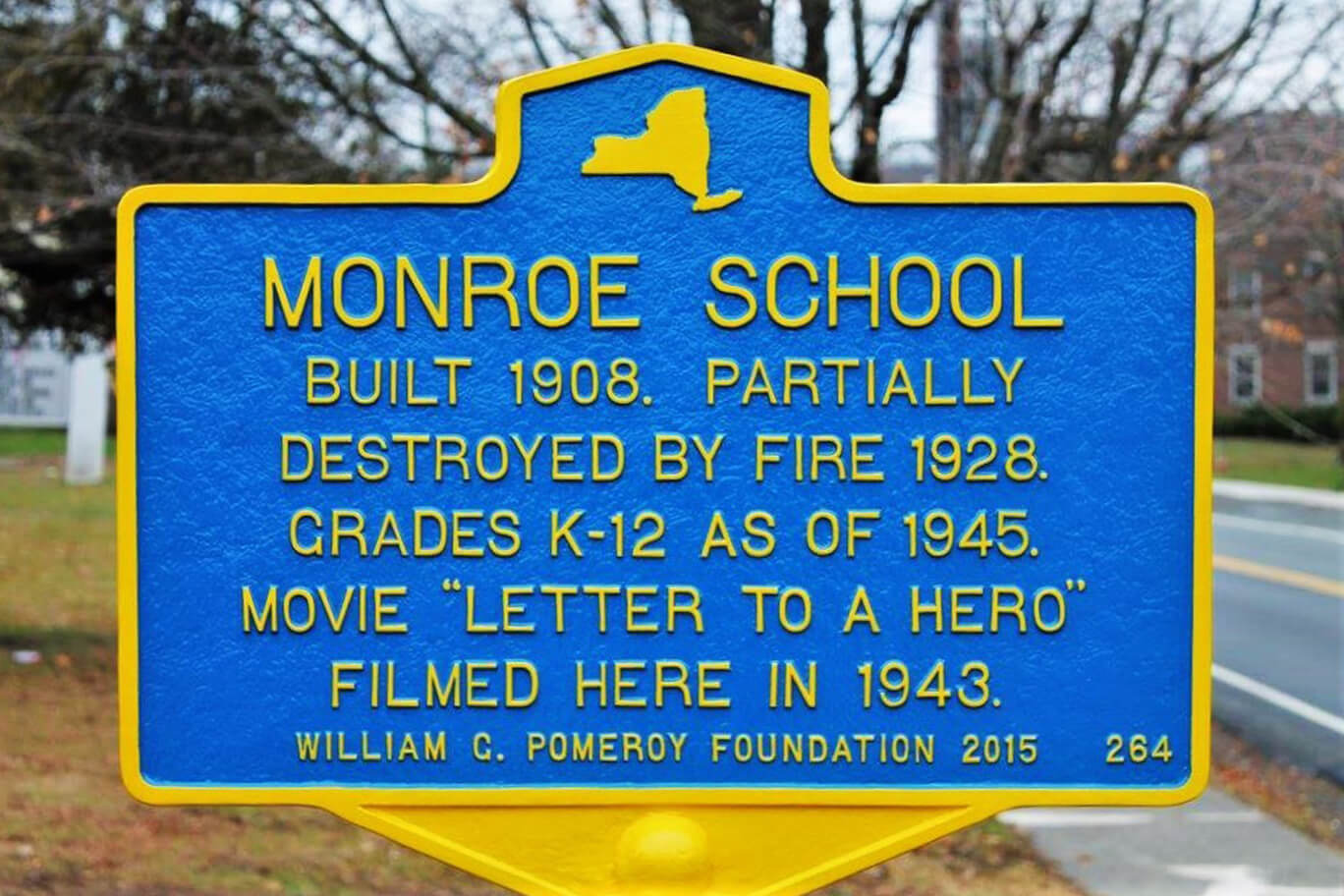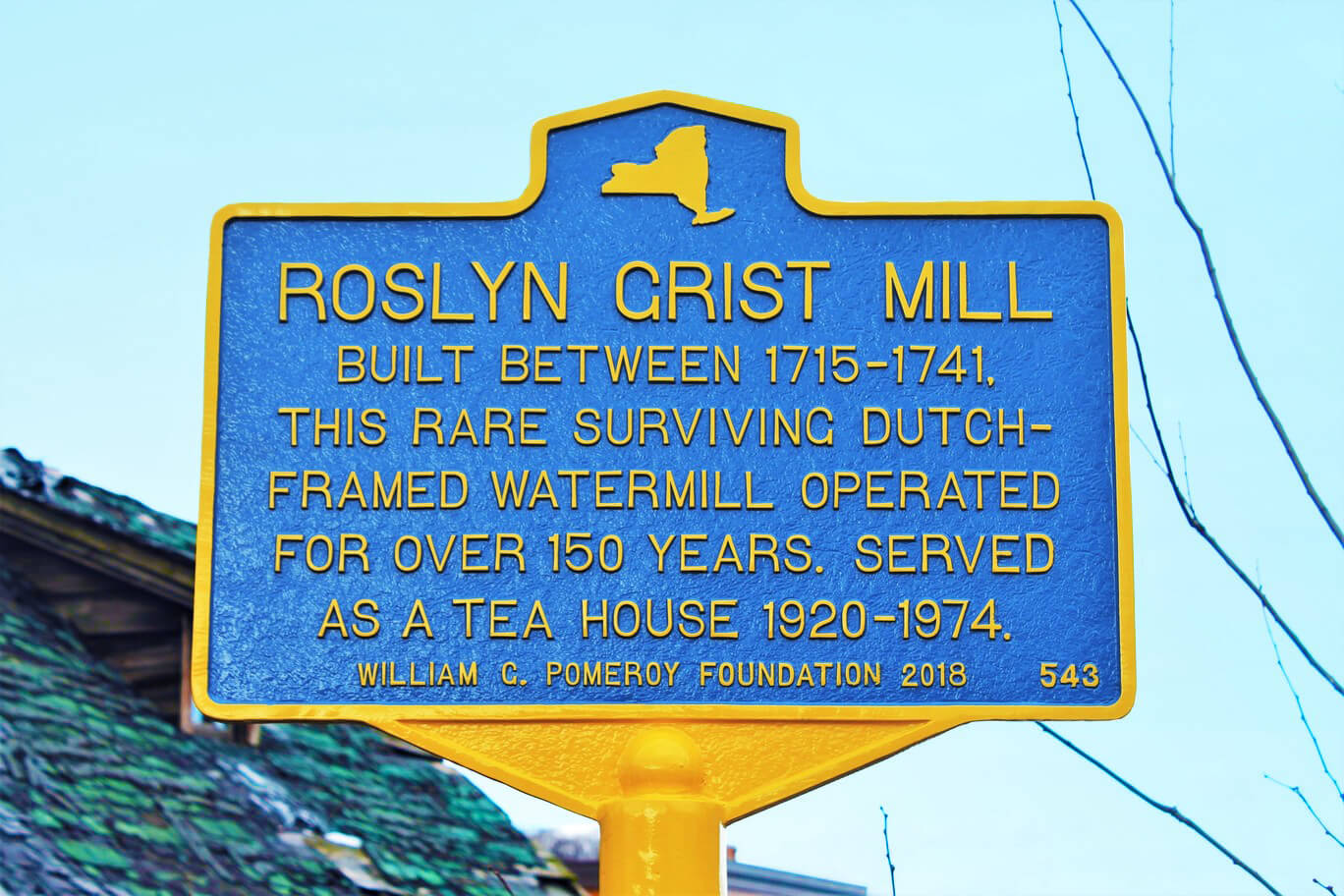
Criteria for Historical Marker Inscriptions
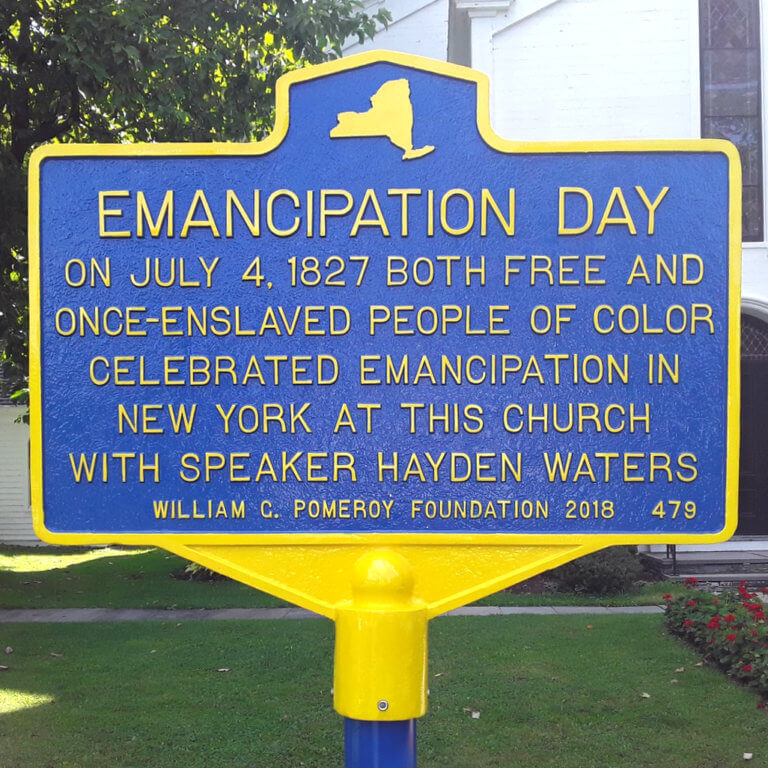
Historical markers are designed to span generations. By obtaining one, you’re doing a service to your community and the public at large. To help ensure the highest quality marker inscriptions, we have established the following criteria to guide you when selecting a subject, location, and inscription.
Click to view our historical marker criteria guide: Marker Criteria Overview
Subject Criteria
- The subject of the marker must be historically significant to the larger community or beyond, and this must be documented with primary sources.
- Think about “What history happened here?” If the subject is not significant beyond one person or family, it will not qualify for a marker.
- The subject of the marker must fall within the time frame, which is between 1683 and 100 years prior to the date of the application. In other words, the historical event, place, or person must be older than 100 years.
- The marker inscription must be proven using primary source documentation. See our page on Primary Source documentation for more information.
- We will not approve any applications for markers that duplicate existing signage or markers. The subject matter must be entirely original, highlighting aspects of history that are not already commemorated, unless the marker is a replacement.
- For more guidance pertaining to Buildings, Cemeteries, Farms, Places of Worship and Schools, see the section below.
Guidelines for Buildings, Cemeteries, Farms, Places of Worship and Schools
Click the Plus Sign to See Guidelines for This Section
Particular attention to historical significance must be provided when submitting an application for subjects in any of the following areas: buildings, cemeteries, family farms, places of worship and schools. If your application falls into one of these areas, consult the following guidelines:
- Buildings and Homes – Regardless of the type or age of structure, primary sources must prove the building or home’s historical significance to the larger community or beyond. For example, a building or home might have served an important purpose, was designed by a prominent architect or had a noteworthy resident. If you are commemorating a noteworthy resident, focus the marker inscription on the person, not the structure. You should address how the person’s historical significance had an impact on the larger community (i.e. town, city, county, etc.). Consider mentioning if the person served in local government, prominent civic organizations or was a business leader. Applications regarding buildings and homes that still exist or remain actively used are strongly preferred. If the structure no longer exists, your application will not be successful.
- Cemeteries – Consider if any noteworthy figures are interred there. That information should be included in the marker inscription and must be proven with primary sources. Applications for markers recognizing unmarked or abandoned cemeteries without signage are welcomed. For those who want to commemorate Revolutionary War soldiers’ and veterans’ burials only, submit your application through our Patriot Burials Historic Marker Program in partnership with the Empire State Society of the Sons of the American Revolution.
- Family farms – Demonstrate the farm’s historical significance to the larger community (e.g. its operation did something pioneering; there was a far-reaching impact) or the farm property still retains an important feature unique to the area (e.g. lime kilns).
- Places of worship – Identify connections to noteworthy events and/or historical figures. As with all inscriptions, the proposed text must include a more historical context than simply listing out key dates.
- Schools – There must be a historical significance to the larger community that goes beyond serving a specific portion of the school district. Ideally, the marker will commemorate a school building that remains an active educational site. Applications that also prove a noteworthy individual attended are encouraged.
If a significant person, place, thing or event falls outside of these guidelines, you are welcome to submit an LOI. However, the Foundation has the final determination as to whether your application moves forward.
Text and Inscription Criteria
- Inscriptions must be clear about why the subject (person, place, thing, event) is historically significant.
- Every single fact written on the marker must have a primary source to support it. See our Primary Sources page for more information on what is accepted as a primary source.
- At least one key date must be included to contextualize the marker; however, the inscription should not be written simply as a list of dates.
- Inscriptions should maximize available character limits. All five lines must be used.
- Inscriptions have one title line of 15 characters and five body lines with 27 characters each.
- Inscriptions should try to tell a short story that piques interest and motivates people to want to learn more. We always write a longer description for our website marker map want the marker to inspire curiosity despite its brevity.
- Inscriptions need to be accessible to everyone, including students and visitors. We recommend writing it with a 4th/5th grade audience in mind, and avoiding jargon and complex language.
- Do not include National Register status in your marker inscription. We have a dedicated program for National Register markers and plaques.
View our style guide for more information: Historical Marker Style Guide
Location Criteria
- The location must relate in some way to the subject of the marker. This could be as specific as the house someone lived in, or as general as a park in the town where an event happened.
- There must be an existing, related structure for visitors to view when the subject is a building or place.
- It must be a safe location for viewers. This means there is nearby parking, pull-offs, or low-speed roads.
- It must be a safe distance from the road. Markers too close to the road will be considered traffic hazards and will not be approved.
- Highly visible locations are preferred. We want lots of people to see the marker and learn about your local history.
- If there is other existing signage, please consider selecting a location far enough away so that neither the sign nor marker are obstructed.
- In areas that have harsh winters the location must be at least 10’ back from the road due to salting and snow plowing. The plows and salt can contribute to the marker wearing out faster, so for the markers protection we only approve locations that will sustain minimal impact from environmental dangers.
- We recommend you double check who owns the land you are planning to install the marker on. We require a land use permission letter, but due to right-of-way in many towns the property lines are not always where we expect them to be. Use your county’s Parcel Access site to view where the property lines run.
- We recommend installing the marker perpendicular to the road, for maximum visibility from both directions of travel.
Check out our instructions on how to install your marker: Marker Installation and Dedication Guide