
Legends & Lore Inscription Marker Criteria
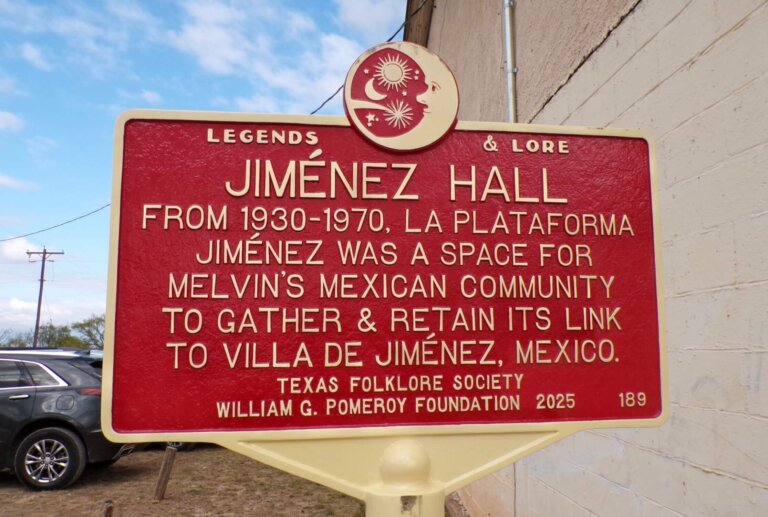
Legends & Lore Marker Criteria
Roadside markers are designed to span generations. By obtaining one, you’re doing a service to your community and the public at large. To help ensure the highest quality marker inscriptions, we have established the following criteria to guide you when selecting a location and composing an inscription.
Subject Criteria
-
- The subject of the marker must be known by and significant to the larger community or beyond, and this must be documented with sources.
- The marker inscription must be proven using sources. See our page on Accepted Sources for more information.
- We will not approve any applications for markers that duplicate existing signage or markers. The subject matter must be entirely original, highlighting folklore or folklife that are not already commemorated, unless the marker is a replacement.
For more subject criteria, visit our About page.
Text and Inscription Criteria
- Inscriptions must be clear about why the subject (i.e. person, place, thing, event) is significant.
- Every single fact written on the marker must have a source to support it. See our Accepted Sources page for more information on what is accepted as a source.
- Inscriptions should maximize available character limits. All five lines must be used.
- Inscriptions have one title line of 15 characters and five body lines with 27 characters each.
- Inscriptions should try to tell a short story that piques interest and motivates people to want to learn more. We always write a longer description for our website marker map, but we still want the marker to inspire curiosity despite its short length.
- Inscriptions need to be accessible to everyone, including students and visitors. We recommend writing it with a 4th/5th grade audience in mind, and avoiding jargon, acronyms, and complex language.
- Do not include National Register status in your marker inscription. We have a dedicated program for National Register signage.
Location Criteria
- The location must relate in some way to the subject of the marker. This could be as specific as the house someone lived in, or as general as a park in the town where an event happened.
- There must be an existing, related structure for visitors to view when the subject is a building or place.
- It must be a safe location for viewers. This means there is nearby parking, pull-offs, or low-speed roads.
- It must be a safe distance from the road. Markers too close to the road will be considered traffic hazards and will not be approved.
- Highly visible locations are preferred. We want lots of people to see the marker and learn about your local history.
- If there is other existing signage, please consider selecting a location far enough away so that neither the sign nor marker are obstructed.
- In areas that have harsh winters the location must be at least 10’ back from the road due to salting and snow plowing. The plows and salt can contribute to the marker wearing out faster, so for the markers protection we only approve locations that will sustain minimal impact from environmental dangers.
- We recommend you double check who owns the land you are planning to install the marker on. We require a land use permission letter, but due to right-of-way in many towns the property lines are not always where we expect them to be. Use your county’s Parcel Access site to view where the property lines run.
- We recommend installing the marker perpendicular to the road, for maximum visibility from both directions of travel.
Check out our Installation Guide for instructions on how to install your marker.